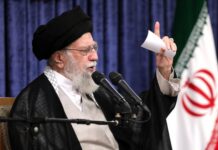
We are back this week after a one-week break with the latest edition of the African Trends newsletter. The past two weeks have been dominated by the US- and Israeli-led airstrike campaign against the Iranian regime. The strikes have reportedly killed Supreme Leader Ayatollah Ali Khamenei, along with several other senior figures in Iran’s leadership.
What began as a confrontation involving the three primary actors has quickly expanded into a broader regional conflict. Iran has retaliated with strikes against Arab states across the Middle East, while Hezbollah, Iran’s Lebanese proxy militia, has also launched attacks against Israel. As a result, the war is increasingly drawing in multiple actors and threatening to engulf the wider region.
However, the consequences of the conflict are not limited to the Middle East. Iran’s effective shutdown of the Strait of Hormuz, through which roughly 20% of the world’s oil supply passes, has triggered a sharp increase in global oil prices.
Amid the discussion surrounding the war, an interesting debate emerged online among Africans about the military capabilities of their own countries should they face a similar kind of conflict. However the reality of African military capabilities, much like what we are witnessing in Iran, are that many African militaries are better equipped to deter and suppress unarmed civilians in order to maintain the power of domestic elites than they are to defend their sovereign territory.
The Sahel provides a clear example. Large swathes of mostly rural territory remain under the effective control of jihadist militants who operate with relative impunity. The persistence of these insurgencies demonstrates the difficulties many African militaries face when confronting well-armed and organised opponents.
Even without the prospect of open conflict, the African continent is already uniquely vulnerable to a range of crises. As discussed in the previous edition of the newsletter, Africa remains far from self-sufficient. Despite possessing some of the most fertile agricultural land in the world, the World Food Programme continues to place several African countries on red alert for potential famine.
This vulnerability is compounded by the gradual reduction of foreign aid in recent years, particularly from the United States. For many countries that have become structurally dependent on external support, these cuts are already having visible consequences.
As long as many of our governments remain primarily self-interested rather than development-focused, this vulnerability will persist across the continent. The world is an increasingly unpredictable place. The role of a responsible government is to plan ahead for major disruptions, whether they come in the form of armed conflict, environmental disasters, social instability, or global supply-chain shocks.
Until that mindset becomes more widespread among African leadership, the continent will remain exposed to crises that it should, in many cases, have the capacity to withstand.
Across the Continent
- Madagascar’s military ruler Col Michael Randrianirina has dissolved the government unexpectedly, dismissing the prime minister and the entire cabinet
- In Guinea, the government of coup leader–turned–president Mamady Doumbouya, banned 40 political parties, along with their logos, acronyms and other symbols from use.
- On Sunday, March 15, the Reuplic of Congo wil hold its presidential election. President Denis Sassou Nguesso, 82, who has been in power since 1997 is widely expected to maintain hsi grip on power.
Country to Watch: Guinea
Decades of authoritarian rule
Guinea’s post-independence history has largely been dominated by authoritarian leadership. Following independence from France in 1958, Ahmed Sékou Touré, one of the leading figures in the struggle for independence, became the country’s first president. His rule was marked by highly centralised authority and widespread political repression, which led to the deaths of many Guineans.
In 1960, Touré declared his ruling Democratic Party of Guinea (Parti démocratique de Guinée, PDG) the only legal political party in the country, effectively turning Guinea into a one-party state. With no legal opposition allowed, Touré was re-elected unopposed to four seven-year terms and ruled as a virtual dictator. His presidency lasted from 1958 until his death in 1984.
Following Touré’s death, General Lansana Conté seized power in a military coup. Initially, his rule appeared to signal a shift toward greater political openness. Conté denounced the human rights abuses of the Touré era, released around 250 political prisoners, encouraged the return of roughly 200,000 Guineans from exile, and closed the notorious Camp Boiro detention centre.
However, despite these early reforms, Conté’s rule ultimately developed into another authoritarian system, albeit one less overtly brutal than that of his predecessor. Conté remained president from 1984 until his death from illness in 2008.
Transition to democracy
Following the death of President Lansana Conté, Guinea entered a period of political instability as competing factions within the military struggled for control. Eventually, General Sékouba Konaté emerged as the leader of a transitional government tasked with organising presidential elections.
Konaté oversaw the country’s first genuinely competitive democratic election in 2010. The vote was won by Alpha Condé, a longtime opposition figure who had spent decades challenging successive Guinean regimes. His victory marked the first time Guinea had elected a president through a democratic process.
Weak democratic institutions
Guinea’s transition to democracy, however, quickly encountered serious challenges. Subsequent elections in 2015 and 2020 were marred by accusations of fraud and irregularities. In 2020, President Condé pushed through a constitutional referendum that allowed him to bypass presidential term limits and seek a controversial third term.
The move triggered widespread protests across the country between 2019 and 2020. Condé’s government responded with violent crackdowns on demonstrators and opposition figures, some of whom died in detention. These political tensions were further aggravated by rising economic hardship, as many Guineans struggled with increasing prices for basic goods.
Amid the unrest, the Guinean armed forces launched a coup on the morning of 5 September 2021, overthrowing President Condé.
Return to authoritarianism
Under the leadership of General Mamady Doumbouya, Guinea has largely returned to the authoritarian patterns that have characterised much of its post-independence history. Although Doumbouya initially pledged to organise free and fair elections, the political environment has grown increasingly restrictive.
The presidential election held on 17 January 2026 took place amid reports of the disappearance of political activists, while anti-government protesters faced threats of life imprisonment from the ruling junta. Doumbouya ultimately claimed victory with 86.72% of the vote, a result that many observers argue is highly improbable in any genuinely competitive democratic election.
Why Guinea Matters:
Guinea illustrates how easily democratic transitions can unravel when political institutions remain weak. Despite decades of promises of reform, the country continues to cycle between authoritarian rule, military coups, and contested elections. Guinea’s political trajectory therefore raises a familiar question across much of the continent: whether democratic transitions built on weak institutions can withstand the enduring influence of military power and entrenched political elites.
Numbers that matter
- Brent crude rose by more than 9% on Thursday to $101.59 before easing slightly to $99.44.
- The International Energy Agency (IEA) said on Wednesday that it will release a record 400 million barrels of oil in an attempt to curb the economic impact of the US-Israel war with Iran.
- On Thursday: The US Dow Jones Industrial Average and the S&P 500 both opened 1.3% lower while the Nasdaq dropped by 1.7%.
Quote of the Week
“Without moral and intellectual independence there is no anchor for national independence.” – David Ben-Gurion