An interesting pattern has emerged among African political commentators in recent years: a growing fascination with Singapore’s development story, and more specifically with Lee Kuan Yew, the founding architect of the modern Singaporean state. Under his leadership, what had once been an underdeveloped British colony was transformed into one of the world’s most prosperous and highly developed nations, achieved under a political system often described as disciplined, centralised, and semi-authoritarian.
As many Africans grow increasingly disillusioned with post-independence governments perceived as corrupt, ineffective, and self-serving, a renewed attraction toward strongman leadership has begun to take hold. Across public discourse, there is a rising belief that only a powerful and uncompromising leader can confront corruption, impose order, and accelerate development. The popular enthusiasm surrounding military leaders such as Ibrahim Traoré illustrates this growing appetite for decisive, centralised authority. In this imagination, Lee Kuan Yew has become the model leader many believe Africa requires.
However, this renewed desire for strongman rule is deeply misguided. Africa’s post-independence history is already replete with authoritarian leaders who rose to power promising discipline, national renewal, and rapid development. Yet, rather than prosperity, their regimes were frequently characterised by entrenched corruption, repression, extrajudicial violence, political patronage, and ethnic polarisation, dynamics that ultimately undermined our institutional development and long-term economic growth.
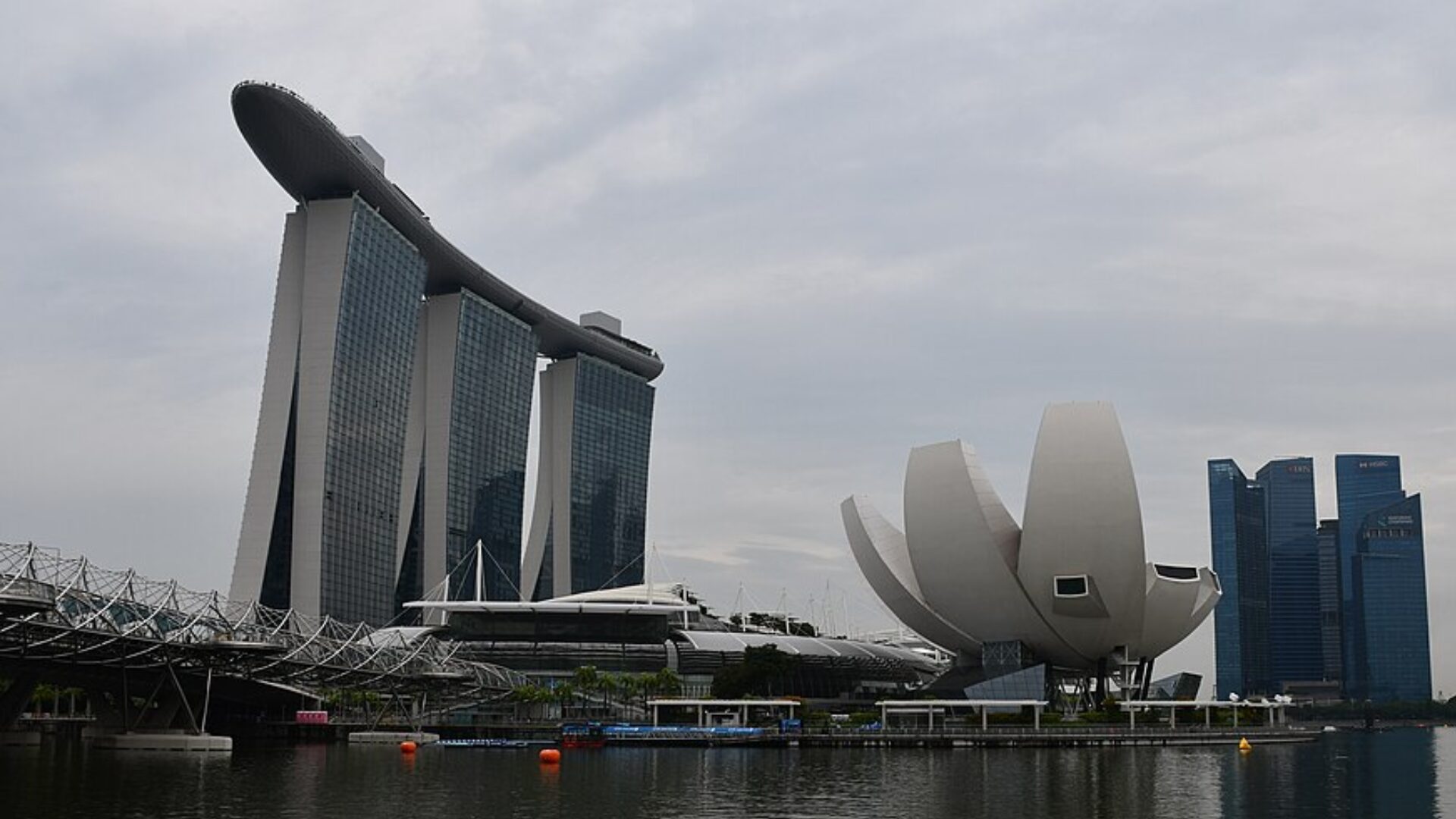
The fundamental flaw in comparing African states to Singapore lies in ignoring the vast structural differences between them. The most obvious distinction is that Singapore is a city-state. Unlike most African countries, it governs a compact urban territory with a relatively small population and tightly manageable administrative boundaries. Within its borders, Singapore possesses virtually no mineral or oil wealth, limited arable land, and scarce freshwater resources. Its only notable natural advantages lie in its maritime environment and its strategic geographic position along major global trade routes.
Precisely because of these limitations, Singapore’s survival depended on external integration rather than resource extraction. The country became heavily reliant on imports for food, energy, and water, leaving human capital as its only viable path to national survival. Development, therefore, was not merely a policy choice, it was an existential necessity.
During Singapore’s post-independence period, Lee Kuan Yew’s government invested heavily in education, industrialisation, and state capacity. Manufacturing sectors such as electronics and advanced industry were deliberately cultivated, while policies were designed to attract foreign investment from American, Japanese, and European firms. Singapore simultaneously leveraged its strategic location by developing world-class port infrastructure and aviation networks, with Singapore Airlines helping transform the country into one of Asia’s principal transportation hubs. Equally critical were stringent anti-corruption measures that professionalised Singapore’s civil service and enhanced the government’s administrative efficiency.
These policies succeeded in lifting millions out of poverty and transforming Singapore into one of the most functional and competitive economies in the world. Yet the lesson many observers draw from this experience is profoundly mistaken. The success of Singapore is often attributed primarily to authoritarian governance, leading some to advocate for similar one-party or military-dominated systems across African states.
This interpretation confuses correlation with causation. Singapore did not succeed because it was authoritarian; rather, it succeeded because its circumstances left it with no alternative but to build an efficient, meritocratic, and highly skilled society. Whether democratic or authoritarian, any Singaporean government would have faced the same structural imperative: without human capital development, the state simply could not survive.
Lee Kuan Yew’s leadership mattered not because it was strongman rule, but because it was technocratic, disciplined, and constrained by national necessity. Singapore’s development emerged from these structural realities that cannot easily be replicated elsewhere, least of all across the vastly different political, geographic, and economic landscapes of Africa.
If authoritarianism alone were the answer to development, then many African countries would already rival Singapore in prosperity. After all, a significant number of African governments already exercise highly centralised power, often operating with limited institutional or democratic constraints. Yet corruption remains widespread across the continent, and developmental outcomes continue to lag behind expectations.

Unlike Singapore, which faced severe natural resource limitations, African countries are among the most resource-endowed regions in the world. Across the continent lie vast deposits of oil, uranium, diamonds, gold, and other valuable minerals. Indeed, it was precisely this abundance that drove European colonisation, as imperial powers constructed extractive economic systems designed primarily to remove wealth from African territories for their benefit.
In the post-colonial era, however, many newly independent African states failed to fundamentally dismantle these extractive structures. Instead, political elites often inherited and repurposed them. Rather than serving foreign empires, these systems increasingly served domestic ruling classes. In many cases, authoritarian governance emerged not to promote national development, but to preserve kleptocratic systems in which leaders systematically embezzle public funds and exploit natural resources for personal enrichment.
Under such conditions, state security institutions including the military, police, and intelligence services, frequently function less as protectors of the public and more as guarantors of regime survival. Authoritarian power becomes sustained through coercion and patronage rather than performance or legitimacy.
This represents the critical distinction between Singapore and much of post-independence Africa. Singapore’s governance could be described as technocratic authoritarianism with centralised authority deployed toward efficiency, institutional competence, and long-term national planning. By contrast, many African states have experienced kleptocratic authoritarianism: political systems organised around resource extraction rather than national development. It is for this reason that the Singaporean model cannot simply be transplanted into the African context. No African country will ever be like Singapore.
A powerful illustration of this dynamic can be found in Nigeria under military ruler Sani Abacha. During his regime, billions of dollars in oil revenues, generated from the resources and labour of ordinary Nigerians, were allegedly diverted into foreign bank accounts controlled by Abacha, his family, and close associates. Abacha has since earned the reprehensible reputation of being one of the most corrupt leaders of the twentieth century, with estimates suggesting that several billions of US dollars were embezzled during his rule, much of which has yet to be fully recovered.
Similar patterns can be observed elsewhere across the continent. In Gabon, long-serving president Omar Bongo governed for more than four decades. Yet, despite Gabon’s country’s considerable oil wealth, poverty and underdevelopemnt persists as state resources have allegedly been diverted into extensive personal holdings of the Bongo family. In Equatorial Guinea, President Teodoro Obiang Nguema Mbasogo, in power since 1979, has faced repeated international allegations concerning the misappropriation of oil revenues and luxury assets linked to ruling elites.
Angola under José Eduardo dos Santos provides another example. Despite presiding over one of Africa’s most oil-rich economies for nearly four decades, enormous national wealth was widely alleged to have become concentrated within political and familial networks. Likewise, the rule of Mobutu Sese Seko in what is now the Democratic Republic of the Congo became so synonymous with systemic looting that his name has become virtually synonymous with the term kleptocracy, as vast mineral wealth was allegedly siphoned into patronage systems while state institutions deteriorated.
Across Africa, theere are near countless examples of authoritarian leadership that promised liberation yet delivered extraction. The greatest mistake the continent could make would be to continue embracing strongman politics despite the overwhelming historical evidence that such systems more often than not produce kleptocracy rather than development.
The reality is that what many citizens often desire is for a messianic figure, an African equivalent of Lee Kuan Yew, capable of sweeping aside bureaucratic hurdles, ending corruption, and rapidly transforming society. Yet building political systems around the hope of such an exceptional individual has repeatedly proven to be disastrous.
Authoritarian governance carries structural realities of its own. In such systems, legitimacy flows primarily from control over security forces rather than from public consent. Therefore, maintaining power requires continuous patronage directed toward military leaders, political allies, business elites, and other loyal networks. Corruption, under these conditions becomes a feature, not a bug.
The enduring appeal of Singapore within African political discourse reveals less about Singapore itself and more about the deep frustration felt by Africans with stagnation, corruption, and the unrealised promises of the independence era. The admiration for Lee Kuan Yew is ultimately an expression of a longing desire for competent leadership, functional institutions, and governments capable of delivering tangible improvements in people’s lives.
But history demonstrates that development cannot be reduced to the willpower of a single leader.
Singapore’s success emerged from a unique convergence of structural necessity, geography, institutional discipline, and political incentives that compelled its leadership toward efficiency and long-term planning. African states, by contrast, operate within vastly different realities: large territories, diverse populations, colonial borders, and economies historically organised around resource extraction rather than productive transformation.
The tragedy is not that Africa lacks strong leaders. Rather, it is that strong leadership in resource-rich environments has too often incentivised control over wealth instead of the creation of wealth. When natural resources generate easy revenue, political competition frequently becomes a struggle to capture the state itself. Under such conditions, authoritarianism tends not toward technocracy, but toward patronage and survival politics.
The lesson Africa should draw from Singapore, therefore, is not authoritarianism, but institutional discipline. Not the concentration of power, but the creation of systems that limit abuse of power. Development is rarely the product of political strength alone; it is the result of accountable institutions, professional bureaucracies, economic diversification, and governments compelled to depend on the productivity of their citizens rather than the extraction of natural resources.
No African country will ever be like Singapore, not because Africans are incapable of development, nor because success is unattainable, but because Singapore’s path was shaped by unique circumstances that cannot be replicated. The danger lies in attempting to imitate outcomes while misunderstanding causes.
Africa’s future will not be built by waiting for another Lee Kuan Yew to emerge. It will be built when political systems make development necessary for survival, when leaders succeed not by controlling resources or security forces, but by empowering citizens, strengthening institutions, and aligning state power with public prosperity.
The question facing Africa, then, is not how to find a strongman, but how to build strong states that no longer need one.