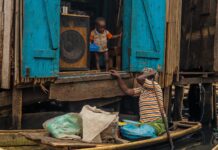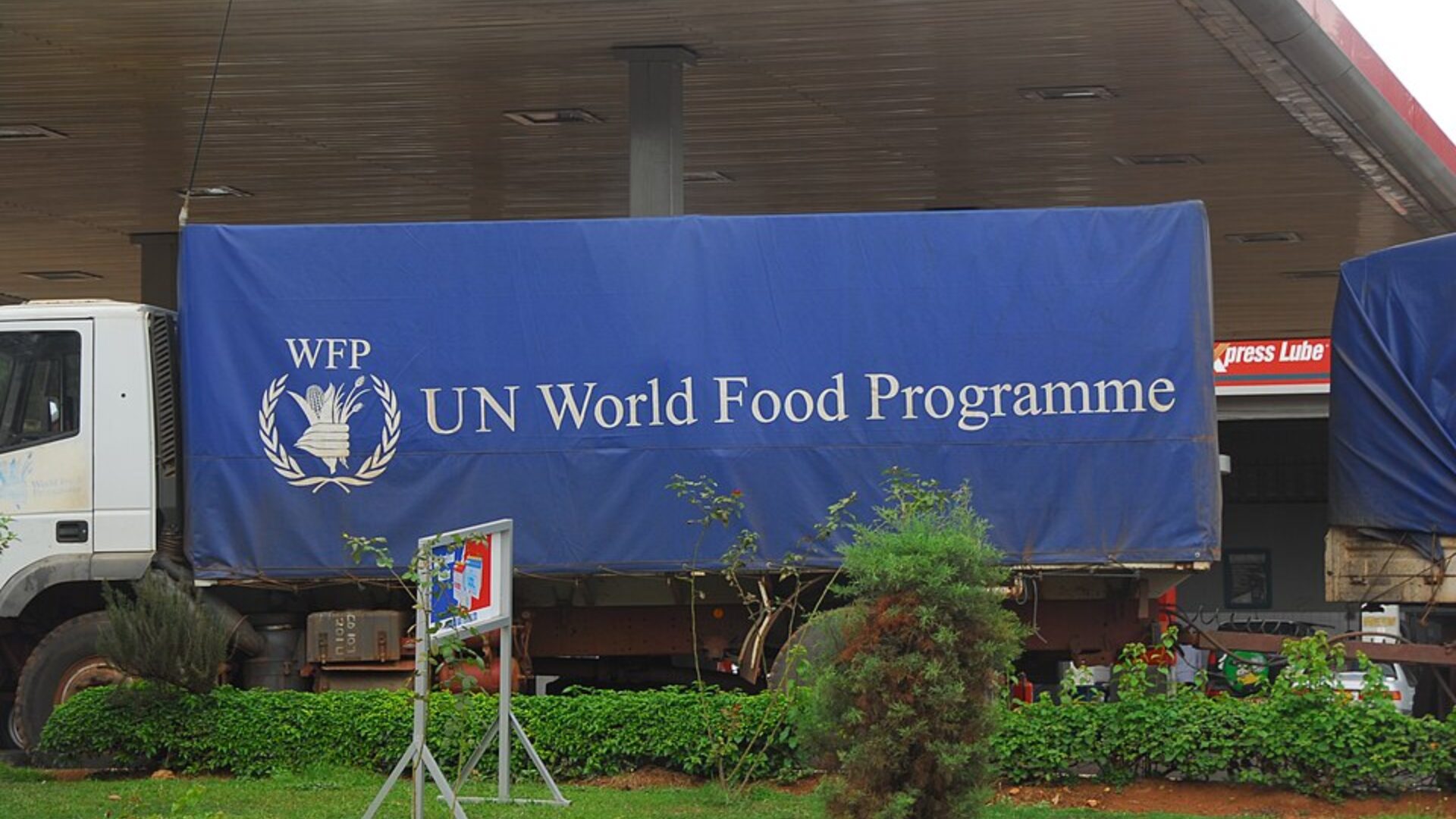
In this week’s edition of the African Trends newsletter we are asking the question: when will Africa become self-sufficient? One of the most notable stories out of Africa this week has been the alarm raised by the World Food Programme about 6.5 million people in Somalia at risk of starvation. This is just part of a broader pattern of rising starvation all across the African continent over the last few years.
There are numerous factors that are playing a role in this rise, for example parts of Southern Africa had been experiencing drought conditions over the last fews years. The El Niño weather phenomenon caused one of the worst regional droughts in over 100 years, leading to declared states of emergency, massive food insecurity, and power shortages due to low hydropower levels. The 2023/24 season saw the lowest mid-season rainfall in 40 years, ruining crops and causing significant losses in cattle, particularly in countries like Botswana, Zimbabwe, and Namibia
More than just drough conditions conflict has also been a major source of starvation across Africa, particularily when looking at the Sahel region where insecurity caused by conflict with jihadists which mainly affects more rural, agriculture based communities result in reduced agriculture production. Moreover, the war in Sudan has resulted in a major humanitarin crisis and refugee crisis affecting all of its neighbouring countries. The breakdown in civilian order that has been ongoing for over 2 years now has resulted in millions of Sudanese at risk of starvation.
Then there has been the significant funding shortages of aid organisations all around the world caused, in large part, by the withdrawal of foreign aid funding by the United States government under the Trump administration. It has been quite eye-opening to see just how many international aid operations had been so dependent on US-government funding and the crisis that has emerged as a result of the United States withdrawing its support.
However, the biggest culprit for the amount of starvation experience aroudn Africa lies in our governance and the fact that corruption has stripped our nations of the ability to be self-sufficient. Within Africa lie some of the most fertile lands anywhere, there is no reason why our nations shoudl fail to feed themselves and yet, that is the reality. Until African states can reliably feed their own populations, regardless of drought, conflict, or fluctuations in foreign assistance, the continent will remain vulnerable to these crises over and over again
True self-sufficiency will not emerge solely from increased aid, emergency relief programmes, or favourable weather cycles. It will require sustained investment in agricultural modernisation, regional trade integration, infrastructure development, and governance reforms that prioritise long-term resilience over short-term political survival. Self-sufficiency ultimately depends less on natural resources than on institutions capable of managing them effectively
Across the Continent
- The United Nations Children’s Fund (UNICEF) says 14 million Nigerian children have had their births officially registered in the past two years.
- The youngest son of former Zimbabwean president Robert Mugabe was placed in police custody following the shooting of a gardener at the family’s Johannesburg home, as South African police launched an attempted murder investigation.
- The US Supreme Court has struck down Donald Trump’s liberation day tariffs. However, following the ruling the US President would announce new 10% global tariffs on imports into the United States via an executive order.
- The breakaway region of Somaliland has continued its diplomatic efforts aimed at gaining recognition by the Trump administration, offering the US access to its rare earth minerals and military bases on its territory. Israel became the first state to recognise Somaliland in December, last year.
- The head of the Rapid Support Forces visited Uganda and met President Yoweri Museveni, at his presidential home in Entebbe. Sudan’s government condemned the visit and accused Uganda of flouting international law by welcoming the RSF commander whose fighters have been accused of committing widespread atrocities throughout the course of the war.
- Ousmane Sonko, Senegal’s Prime Minister, has introduced legislation that could double the maximum penalty for same-sex relations, making them punishable by up to 10 years in prison, describing homosexuality as “acts against nature.”
Country to watch: Mali
This week’s Country to Watch is Mali: a country increasingly at the centre of political, security, and geopolitical transformations reshaping the Sahel region.
Military Rule Entrenched
Mali’s current political crisis traces back to August 2020, when President Ibrahim Boubacar Keïta, who had governed since 2013 and secured re-election in 2018, was overthrown by military officers following months of protests over corruption, insecurity, and economic decline.
The coup initially produced a civilian-led transitional government under President Bah Ndaw. However, stability proved short-lived. In May 2021, Colonel Assimi Goïta, then serving as interim vice president, staged a second coup and consolidated power, a position he continues to hold today.
What began as a promised temporary military transition has gradually evolved into entrenched junta rule.
Rising Authoritarianism
Goïta’s government has increasingly moved to neutralise political opposition. In May 2025, Mali’s military authorities formally dissolved all political parties, effectively eliminating organised democratic competition.
Human rights organisations have raised alarm over growing restrictions on civil liberties, arrests of critics, and limitations on press freedom. Concerns have also intensified over security operations conducted alongside Russian private military contractors from the Wagner Group, whose presence in Mali has been repeatedly linked to allegations of civilian abuses.
In July 2024, the transitional parliament granted Goïta a renewable five-year presidential mandate without elections, despite earlier commitments by the junta to restore civilian rule.
Russia and the Sahel Realignment
Under military rule, Mali has dramatically reoriented its foreign policy.
Relations with traditional partners, including France, the United States, and regional bloc Economic Community of West African States (ECOWAS), have deteriorated. Mali has since withdrawn from ECOWAS and aligned itself with Burkina Faso and Niger under the newly formed Alliance of Sahel States (AES).
French counterterrorism forces have departed the country, replaced first by Wagner personnel and increasingly by units linked to Russia’s state-controlled Africa Corps, signalling Moscow’s expanding strategic footprint in the Sahel.
The JNIM Blockade
Compounding Mali’s political isolation is a worsening security crisis.
Since late 2025, the al-Qaeda-linked militant coalition Jama’at Nasr al-Islam wal Muslimin (JNIM) has imposed a sustained blockade targeting key transport corridors supplying the capital, Bamako.
By attacking routes from Côte d’Ivoire and Senegal, kidnapping drivers, destroying cargo vehicles, and disrupting fuel deliveries, militants have severely constrained the movement of essential goods.
The consequences have been profound:
- Electricity shortages reducing power availability to only a few hours daily
- School closures and business disruptions
- Airline rerouting and rising transport costs
- Growing economic pressure on urban populations
Despite military escort operations, Malian forces have struggled to fully break the blockade, undermining public confidence in the junta’s central promise: restoring security.
The Tuareg Question
Overlaying the jihadist threat is Mali’s long-running northern rebellion led by Tuareg separatist movements seeking independence for the self-declared state of Azawad. The roots of the conflict stretch back decades, driven by grievances over political marginalisation, economic neglect, and disputes over land and resource control in northern regions.
In 2012, dissatisfaction with the government’s handling of the rebellion contributed to another military coup that removed President Amadou Toumani Touré shortly before scheduled elections. Although peace agreements have periodically reduced hostilities, tensions between Bamako and northern armed groups remain unresolved. Renewed fighting in recent years suggests that Mali continues to face simultaneous insurgencies, separatist and jihadist, challenging state authority.
Why Mali Matters
Mali today represents more than a national crisis; it is a test case for the future political trajectory of the Sahel.
The country sits at the intersection of several defining continental trends:
- The resurgence of military rule following democratic backsliding
- The decline of Western security influence in Africa
- Expanding Russian geopolitical engagement
- The growing inability of states to contain transnational jihadist movements
- Regional fragmentation as countries withdraw from established multilateral institutions
What happens in Mali rarely stays confined within its borders. Instability has already spilled into Burkina Faso and Niger, contributing to the emergence of a contiguous belt of military-led governments across the Sahel.
If Mali succeeds in stabilising under junta rule, it may embolden similar regimes elsewhere. If it fails, the consequences could accelerate state fragility across West Africa, deepen humanitarian crises, and further reshape global competition for influence on the continent.
For these reasons, Mali remains one of the most consequential countries to watch in Africa today.
Numbers that matter
International cuts to foreign aid have exacerbated the hunger crisis experience across Africa. Here are some of the numbers highlighted by the World Food Programme across Africa in recent months.
- 6.5 million people in Somalia
- 30+ million in Northern Nigeria according to the World Food Program
- 26.6 million in the DRC face acute food insecurity from January 2026
- 55% of all Ethiopian children aged under 5 are malnourished
- 27 million in Southern Africa face food insecurity due to the impact of the El Niño-fuelled drought
The areas around Africa the WFP has declared emergencies in are: Ethiopia, Northeastern Nigeria, the DRC, Mozambique, Somalia, South Sudan, Sudan and Southern Africa due to drought conditions.
Quote of the Week
“A hungry man is not a free man” – Adlai E. Stevenson