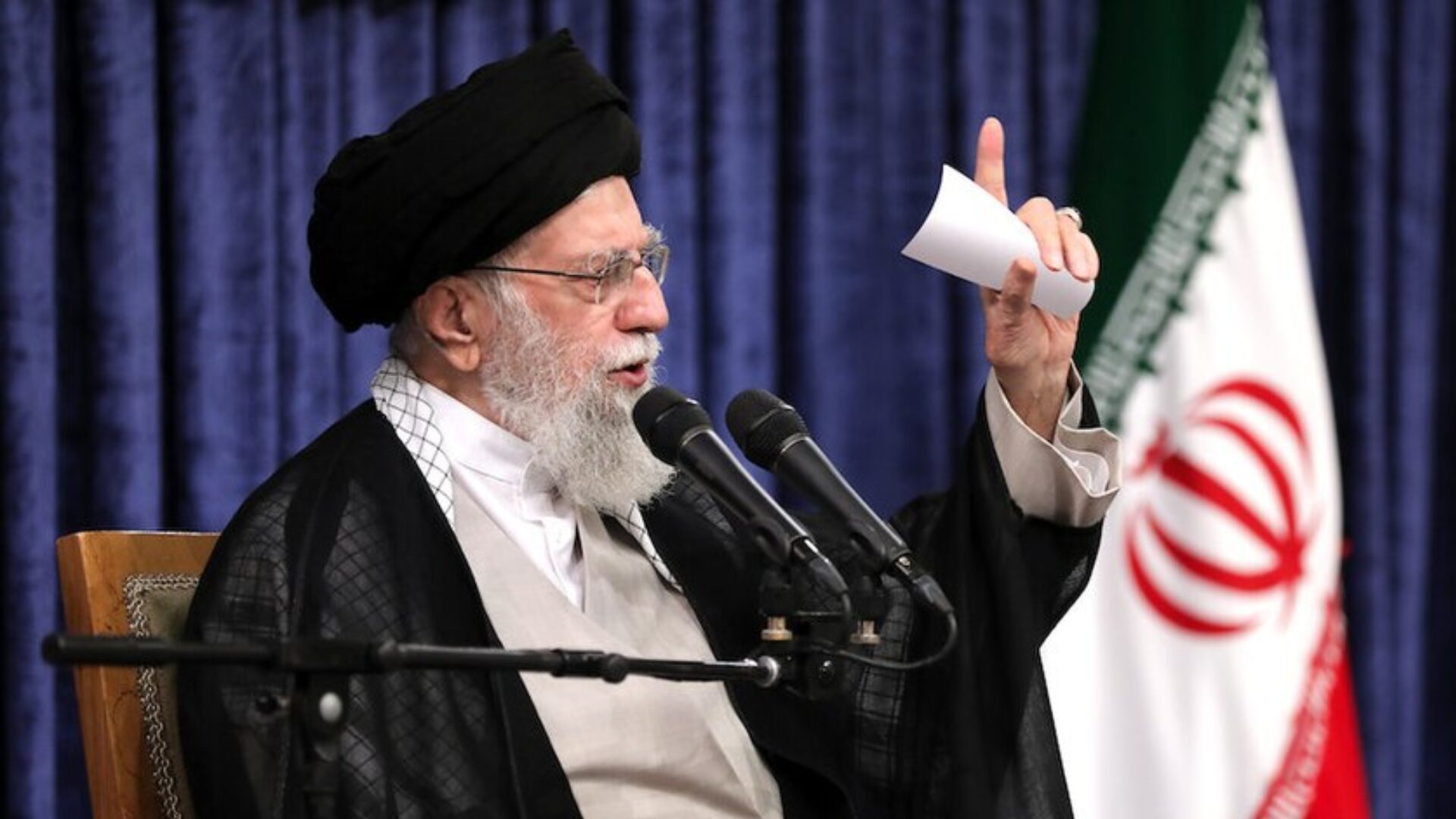
On 28 February, the United States and Israel launched a military operation against Iran. Within the first wave of strikes across the country, Iran’s Supreme Leader, who had ruled for 36 years, was reportedly killed, along with several senior figures within the Islamic regime. The operation immediately reignited a longstanding global debate: when, if ever, is foreign intervention justified?
To understand the gravity of this moment, one must understand the history of resistance within Iran itself.
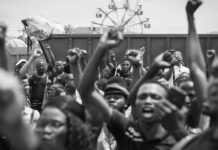
From almost the very outset of the Islamic Republic, large segments of Iranian society have resisted clerical rule. In 1979, shortly after the revolution, over 100,000 women took to the streets of Tehran during the International Women’s Day protests to oppose newly announced mandatory hijab laws. In 1981, widespread anti-government demonstrations erupted. Student-led protests followed in 1999. Further waves of unrest shook the country in 2009, 2017, 2018, and 2019.
Most recently, between 2022 and 2023, the “Woman, Life, Freedom” movement mobilised millions after the death of 22-year-old Mahsa Amini while in the custody of Iran’s so-called “morality police,” who enforce compulsory hijab laws. The protests were not merely about dress codes; they became a broader rejection of authoritarian rule, economic decline, and the absence of personal freedoms.
The government’s response across these decades has followed a familiar pattern: violent crackdowns. Arrests, torture, and extrajudicial killings have been widely documented as tools used to suppress dissent. The grievances voiced by protesters are multifaceted: an economy weakened by sanctions and mismanagement, entrenched corruption, the enforcement of strict religious doctrine by the state, limited electoral representation, and severe restrictions on civil liberties.
This latest wave of unrest, triggered by disastrous economic conditions and the collapse of the Iranian rial, brought millions into the streets across the country. As in previous years, the regime responded forcefully. However, this year’s crackdown is alleged to have escalated into mass killings of civilians. Estimates of the death toll vary dramatically, ranging from several thousand to tens of thousands. While the precise figures remain contested, what appears indisputable is that large-scale violence was deployed against civilians in order to preserve political power.
Beyond the immediate repression of protests, corruption within the Iranian state has deepened economic hardship for Iran’s population of over 90 million people. The government’s regional policies, its support for militant organisations across the Middle East and its nuclear ambitions, have prompted severe U.S.-led sanctions, further straining the economy and limiting opportunities for ordinary Iranians.
Structurally, the Islamic Republic fuses religion and state. Real authority lies not primarily with elected officials, but with the clerical establishment. This system enforces an ultra-conservative interpretation of Islam in a diverse society. Iran is home to multiple ethnic groups, religious traditions, and political philosophies. Yet, the Islamic regime has restricted cultural expression, institutionalised discrimination, particularly against women, and overseen environmental mismanagement that has contributed to water shortages and agricultural decline.
Despite the diversity of Iranian society, one theme has echoed consistently through decades of protest: many Iranians desire political change. The repeated cycles of demonstration and repression suggest a profound disconnect between the ruling establishment and significant portions of the population.
This then begs the central question: when is foreign intervention justified? If a government is deeply unpopular, operates without a genuine democratic mandate, and has repeatedly shown a willingness to kill large numbers of the very civilians it is meant to serve in order to cling to power, what responsibility does the international community, and institutions such as the United Nations, bear in addressing such a situation?
We live in a time when the principles of sovereignty and territorial integrity are often treated as absolute. Yet, these principles were originally intended to prevent powerful states from absorbing, exploiting, or colonising weaker ones, a rejection of imperial domination that characterised much of human history. They were meant to shield nations from external aggression, not to provide moral cover for internal repression.
In the modern era, however, sovereignty has frequently been interpreted to mean that governments may arrest, imprison, torture, kill, plunder public wealth, and degrade their environment without consequence, provided these actions occur within their internationally recognised borders. This interpretation is particularly fraught in parts of the Global South, where borders were often drawn by European colonial empires with little regard for ethnic, linguistic, or religious realities on the ground. Sovereignty in such cases protects the state structure, but does it necessarily protect the people?
The situation in Iran illustrates this tension clearly. If a government kills potentially thousands, or even tens of thousands, of its own citizens to remain in power, that should constitute a matter of urgent international concern. Such actions demonstrate that civilians are in grave danger not from foreign invasion, but from their own rulers. Yet the international responses to alleged mass killings have been subdued, limited largely to statements of condemnation rather than meaningful any protective action for Iranian civilians.
Notably, after the United States and Israel launched strikes against Iranian targets, the Secretary-General of the United Nations condemned the violation of Iran’s sovereignty. Moreover, while the U.S. President Donald Trump had publicly expressed support for Iranian protesters and warned against their repression, the military action itself appears driven less by humanitarian concern and more by strategic calculations, particularly Iran’s nuclear and ballistic missile programmes. In other words, even when intervention occurs, it is rarely rooted in the protection of civilians.
This raises a troubling pattern: why does “violating sovereignty” often appear to rank as a graver offence in international discourse than massacring one’s own citizens? Is external intervention against perpetrators of mass violence inherently worse than the violence itself?
Within the republican tradition, government is conceived as a form of servant leadership. Authority derives from the people, and political power exists to serve them, not to dominate them. When a regime maintains power through systematic violence against its own population, it undermines its own legitimacy. In such cases, moral sympathy should rest first and foremost with the victims of state violence, not with the structures that perpetuate it.
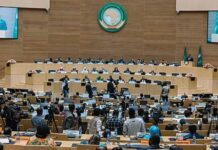
One structural limitation of international institutions such as the United Nations is that they represent states, not peoples. Governments, whether democratic or authoritarian, occupy the seats, cast the votes, and shape the resolutions. When many member states themselves struggle with authoritarian tendencies, the result can be an institution that shields regimes rather than empowering citizens.
Iran is far from the only example of a population governed by a regime that lacks broad public support. Similar dynamics can be found in various parts of the world, where governments maintain control through repression rather than consent.
The stated mandate of the United Nations is to promote peace, dialogue, and cooperation among nations. If, however, the consistent defence of sovereignty eclipses the defence of human life and dignity, the institution risks drifting from its foundational purpose. When sovereignty becomes an absolute shield for repression, it ceases to function as a principle of justice and becomes instead a barrier to it.