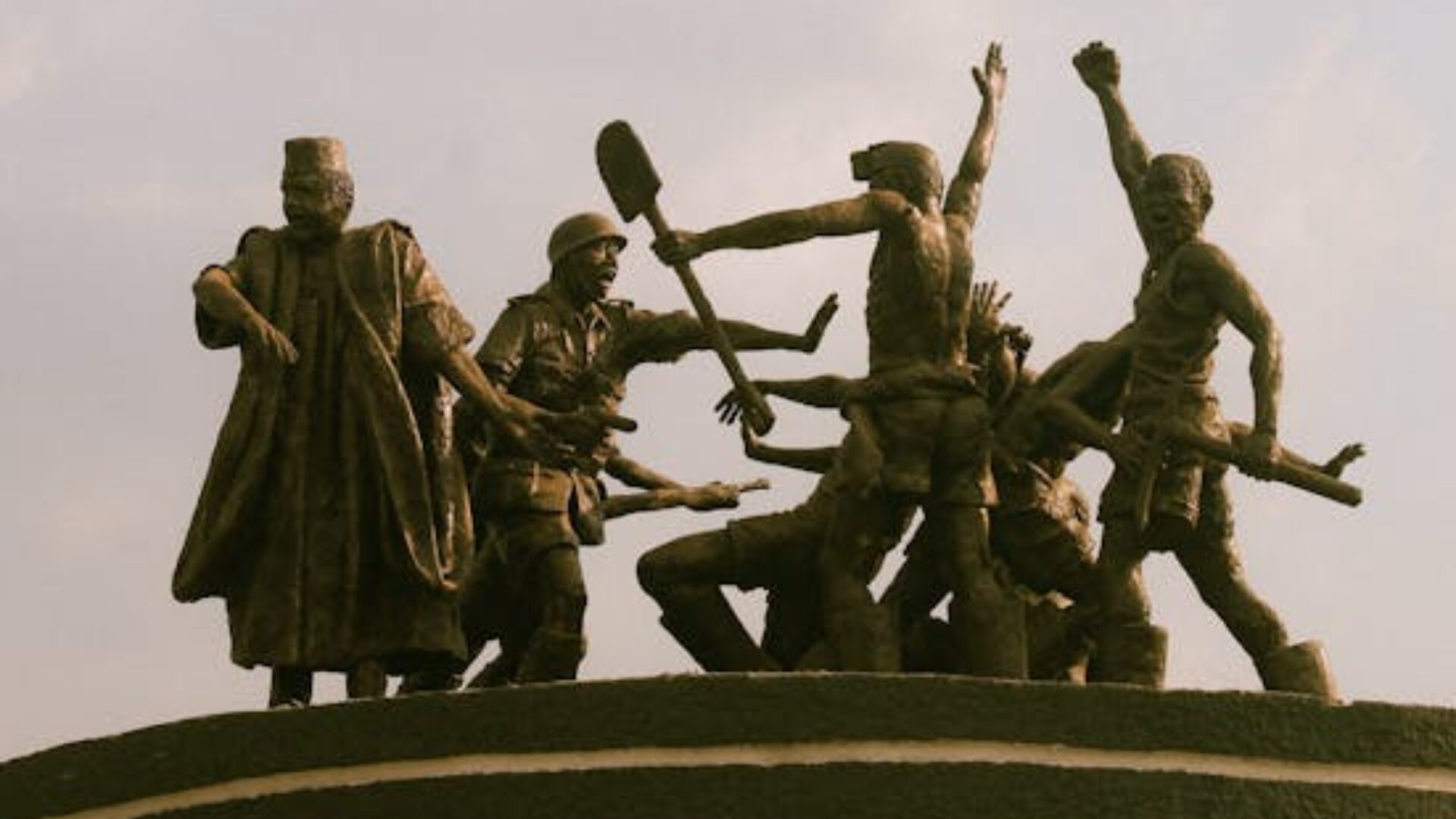
One of the most damaging consequences of modernity in Africa has been the gradual erosion of traditional African cultures and languages. Through both direct and indirect means, numerous cultures and languages, particularly those of minority tribes, have gone extinct or now face extinction. The post-colonial era, for the most part, has failed to deliver a meaningful cultural revival after more than a century of systematic suppression under European colonial rule.
As the struggle for independence across much of Africa drew to a close, a new struggle emerged: the battle for political power among indigenous elites. In this environment, culture and tribal identity often became political fault lines. Ethnic, tribal, and religious identities were weaponised as competing groups fought for control of the state. In many African countries, separatist movements, frequently led by minority groups seeking to escape borders imposed during the colonial era, turned cultural identity into yet another source of conflict and division.
Compounding this issue have been deliberate attempts by post-independence African governments to promote cultural homogenisation in the name of national unity. In order to maintain control over newly formed states, many regimes sought to construct singular “national cultures” that all groups within their borders could supposedly identify with. However, this process often came at the expense of pre-existing tribal identities that long predated the modern African state. Rather than being protected, these identities were marginalised or discouraged.
Religion has also played a significant role. As Christianity and Islam became the dominant religions across much of the continent, many indigenous cultural practices were condemned or stigmatised by religious institutions, often being labelled as pagan or heretical. This further weakened traditional belief systems, rituals, and cultural expressions that were once central to communal life.
Beyond politics and religion, everyday structural factors have made cultural preservation increasingly difficult. Many African languages belong to predominantly oral traditions, with limited written or digital resources. This makes them difficult to study, teach, or experience outside of their native communities. At the same time, most African countries operate with official national languages, often inherited from the colonial era, which provide far greater economic and social mobility than indigenous languages. As a result, learning and using local languages is frequently viewed as impractical or even burdensome.
The global dominance of the English language has intensified this trend. Driven largely by American cultural influence, English now dominates social media, film, television, politics, and global commerce. Economic pressures further accelerate cultural loss, as people migrate away from their communities in search of better opportunities, often assimilating into new linguistic and cultural environments in the process.
Taken together, these factors paint a bleak picture for the future of many African languages and cultures. Environmentally and socially, preservation is difficult. Politically, many states prioritise homogeneity as a means of control. Economically, hardship forces people away from their communities, weakening intergenerational cultural transmission.
However, in my view, the most critical issue of all is the absence of strong, enduring cultural institutions across much of Africa. When we look at cultures that continue to captivate global interest, particularly in Europe and Asia, their longevity is not accidental. These cultures benefited from institutions dedicated to documentation, preservation, and transmission across generations.
Our fascination with ancient Greek, Roman, Chinese, or Japanese traditions exists because these cultures were systematically recorded and protected over centuries. Writing systems, archives, and scholarly traditions played a central role in preserving knowledge from antiquity to the present day. Institutions such as royal courts, national libraries, universities, museums, and religious bodies ensured cultural continuity long after political systems changed.
The most effective way for Africans to resist the erosion of their cultures is to follow the example of cultures that have successfully endured for centuries: by building durable institutions explicitly dedicated to cultural preservation. Along these lines, I propose what I will refer to as the “Vatican model” for African cultures a framework for cultural institutions designed to preserve, document, and transmit indigenous traditions into the modern era.
Vatican City is a small enclave located within Rome that serves as the administrative and spiritual capital of the Catholic Church. In one form or another, the Vatican has existed for over a thousand years, with origins that can be traced back to the fourth century. Within its walls are some of the most significant cultural, religious, and historical artefacts in Western civilisation. Its libraries house early biblical manuscripts dating back many centuries, while its museums preserve works by artists such as Michelangelo, Raphael, and Leonardo da Vinci.
Over time, the Vatican has functioned not merely as a religious centre, but as a major cultural institution for Western civilisation itself. The Vatican Library, in particular, is often described as a treasure trove of Western intellectual and cultural history. In my view, several aspects of how the Vatican operates as a cultural institution can be meaningfully adapted by African societies seeking to preserve their own cultures.
Despite being located within Italy, Vatican City is a sovereign entity, having gained formal independence in 1929 through the Lateran Treaty. It maintains its own legal system, operates with its own official language, and governs its internal affairs independently of the Italian state. While African cultural institutions need not replicate this arrangement in full, a similar degree of autonomy could be granted to tribal or cultural bodies tasked with preservation.
One could imagine autonomous cultural enclaves within African states that function as administrative and symbolic cultural capitals for specific ethnic or tribal groups. Within such spaces, traditional chieftaincies and cultural authorities could perform their functions without undue interference from the modern state. Like the Vatican, these capitals would house key cultural institutions: libraries, museums, archives, and research centres, dedicated to the systematic documentation and preservation of language, history, and tradition.
Crucially, these institutions would also operate modern communication platforms. Indigenous languages could be preserved and revitalised through radio, television, publishing, blogs, and social media, much in the same way the Vatican maintains its own print, broadcast, and digital media presence. This would allow traditional cultures to remain living, evolving systems rather than museum artefacts frozen in time.
Importantly, the purpose of such cultural capitals would not be to confine African cultures to a single geographic location, just as Catholicism is not confined to Vatican City. Rather, these institutions would serve as formal custodians, bodies responsible for safeguarding cultural continuity while actively guiding these traditions into contemporary life.
Beyond cultural preservation alone, such institutions could also invest in sectors that directly support long-term cultural survival. Education, in particular, would be central. Ideally, these cultural bodies would have ownership stakes or partnerships in primary and secondary schools, and most critically, universities. Since language and culture are most effectively preserved through structured education, this represents one of the most powerful tools available for cultural transmission.
As with the Vatican, funding for these institutions could be drawn from multiple sources, including state subsidies, private donations, diaspora contributions, and commercial investments. With the right institutional framework, African cultures would no longer be reliant solely on informal transmission, but would possess permanent structures capable of preserving their heritage across generations.
At first glance, the proposal of autonomous cultural institutions within African states may appear unrealistic, divisive, or even dangerous. Critics may argue that such a model risks encouraging separatism, ethnic conflict, or the weakening of already fragile states. These concerns are understandable, but they are ultimately based on misinterpretations of both the intent and function of the model being proposed.
The first and most common criticism could be that granting autonomy to tribal cultural institutions could fuel separatist ambitions. However, cultural autonomy does not inherently equate to political secession. The Vatican itself demonstrates this distinction clearly: despite its sovereignty, it poses no threat to Italian territorial integrity, nor does it seek to replace the Italian state. Similarly, the proposed cultural capitals are not intended to function as rival states, but as custodial institutions operating within the legal framework of existing African nations.
Another concern could be that emphasising tribal identity risks deepening ethnic divisions in societies already marked by fragile intergroup relations. Yet this argument overlooks the fact that suppressing cultural identity has historically done far more to inflame conflict than to prevent it. In many African contexts, ethnic tensions have arisen precisely because cultural identities were politicised, marginalised, or forced into competition by the state. Institutionalising culture, meaning removing it from day-to-day political struggles, may in fact depoliticise identity rather than radicalise it.
A further criticism may be that such institutions would be economically unviable, particularly in countries facing pressing developmental challenges. In response, it is important to note that cultural preservation need not come at the expense of economic development. On the contrary, well-managed cultural institutions can become economic assets through education, research, publishing, tourism, and media production. The Vatican itself, along with other cultural institutions in Europe and Asia, illustrate how culture and economic sustainability can reinforce one another rather than compete.
Some may also argue that African cultures are too dynamic and localised, making them ill-suited to formal institutional preservation. While it is true that African cultures are living and adaptive, this is not an argument against institutions, but an argument for better ones. Institutions need not fossilise culture; they can document evolution, support linguistic development, and provide platforms for contemporary cultural expression. The absence of institutions does not preserve authenticity, it accelerates disappearance.
Finally, critics may contend that modern African states should prioritise national unity over cultural particularism. Yet in realy national unity built on cultural erasure is inherently unstable. Genuine unity is far more likely to emerge when citizens feel that their identities are respected, protected, and valued. Recognising and preserving cultural diversity does not weaken the nation-state; it strengthens its legitimacy by acknowledging the realities of its social fabric.
In this sense, the Vatican model should not be viewed as a radical departure from the African state, but as a corrective to its post-colonial shortcomings. By creating durable, non-partisan institutions dedicated to culture, African societies can preserve their heritage without reopening the wounds of political fragmentation.
The erosion of African cultures and languages is not simply a matter of tradition fading with time; it is the result of historical disruption, political choices, economic pressures, and institutional neglect. Colonialism fractured cultural continuity, and the post-colonial African states have often, both intentionally and unintentionally, continued this process by prioritising homogenisation, expediency, and political control over cultural preservation. Globalisation has only accelerated these trends, promoting American culture in particular, while marginalising indigenous knowledge systems.
Yet this kind of cultural decline is not inevitable. History shows that cultures endure when they are supported by institutions capable of documenting, protecting, and transmitting them across generations. The cultures that dominate the global imagination today did not survive by chance; they survived because they were taken seriously enough to be preserved deliberately.
African societies need to move beyond the informal and fragile methods of cultural transmission. The Vatican model offers one possible framework for addressing this institutional vacuum in Africa. By establishing autonomous, well-resourced cultural bodies, capable of operating in education, media, research, and public life. Such institutions would not confine culture to the past or to specific locations, but would act as living custodians, ensuring that tradition evolves alongside modernity rather than being erased by it.
Crucially, preserving African cultures should not be viewed as an obstacle to national unity or economic progress. On the contrary, societies that respect and protect their cultural diversity are often more stable, more legitimate, and more confident on the global stage. A future in which African cultures survive only as footnotes in academic texts or as aesthetic backdrops for tourism is a future of profound loss, not only for Africans, but for humanity as a whole.