One of the most persistent criticisms levelled against the African Union (AU) is that it is ineffective, that it does not do enough to address the many challenges facing the continent. Given Africa’s long list of structural problems, poverty, corruption, insecurity, ethnic violence, and protracted wars, this frustration is understandable. Many conclude that the AU is failing in its duty to serve Africans. However, this criticism often rests on a fundamental misunderstanding. There is a wide and rarely acknowledged gap between what Africans expect the African Union to be, what it claims to stand for, and what it actually exists to do.
Officially, the African Union is mandated to promote peace, security, democracy, human rights, and sustainable development across the continent. Judged by these stated goals, both the AU and its predecessor, the Organisation of African Unity (OAU), appear to be resounding failures. The post-independence history of Africa has been marked by recurring civil wars, military coups, and internal conflicts. In the face of devastating wars that have claimed millions of lives, the AU has largely confined itself to issuing statements and calls for peace, with little meaningful intervention to halt the bloodshed.
Even recent history offers no shortage of such examples. The ongoing war in Sudan has left hundreds of thousands dead and millions displaced. Yet it is difficult to point to any decisive or meaningful role the African Union has played in ending the conflict or protecting Sudanese civilians. Similarly, Ethiopia, teh home to the Afincan Union’s headquarters, was the site of the Tigray war between 2020 and 2022, widely regarded as one of the deadliest conflicts of the 21st century. An estimated half a million people were killed, with extensive human rights violations committed by all sides. Throughout this period, the AU’s response was, at best, muted.
The same pattern is evident in the realm of democracy. Not only has the African Union failed to promote democratic governance, it has frequently acted to legitimise authoritarian rule throughout the continent. Genuine democracies remain rare across Africa, yet following blatantly rigged elections, the AU is often among the first institutions to congratulate incumbent leaders on their so-called “victories.” In doing so, it confers legitimacy on regimes that rule through repression rather than popular consent.
More than anything else, this reveals the true nature of the African Union. While the organisation was founded on the principle of self-determination, and while the OAU once played a central role in supporting liberation movements across the continent, today the AU routinely shields indigenous-led authoritarian regimes from accountability. The transition from resisting foreign domination to entrenching domestic authoritarianism has not been an accident; it reflects what the African Union has ultimately become.
On the question of human rights, this is another area in which the African Union has not merely failed to uphold its mandate but has actively shielded abusive regimes. The AU has consistently provided diplomatic cover for African leaders accused of grave human rights violations. One of the clearest examples is Sudan’s former president, Omar al-Bashir. After the International Criminal Court (ICC) issued an arrest warrant against him for genocide and crimes against humanity committed in Sudan’s Darfur region, the African Union chose not to stand with the victims. Instead, it condemned the warrant and rallied behind Bashir, despite the overwhelming evidence of atrocities committed under his rule.
This pattern extends far beyond Sudan. Across the continent, African regimes have carried out genocides, extrajudicial killings, enforced disappearances, and arbitrary arrests under the watch of the African Union. In response, the AU has typically limited itself to statements of concern or calls for restraint, rarely followed by concrete action. Such performative condemnation serves less as a mechanism for accountability and more as a means of preserving the status quo.
Sustainable development is yet another area in which the African Union has proven itself ineffective. Rampant corruption within African governments has systematically stripped the continent of its developmental potential, leaving millions of young Africans with little prospect of a dignified future. Decades after independence, many African states still lack basic infrastructure necessary for everyday life, while much of the continent remains dependent on foreign aid. Yet the African Union continues to produce ambitious development frameworks and long-term visions that have little tangible impact on the daily realities of ordinary Africans.
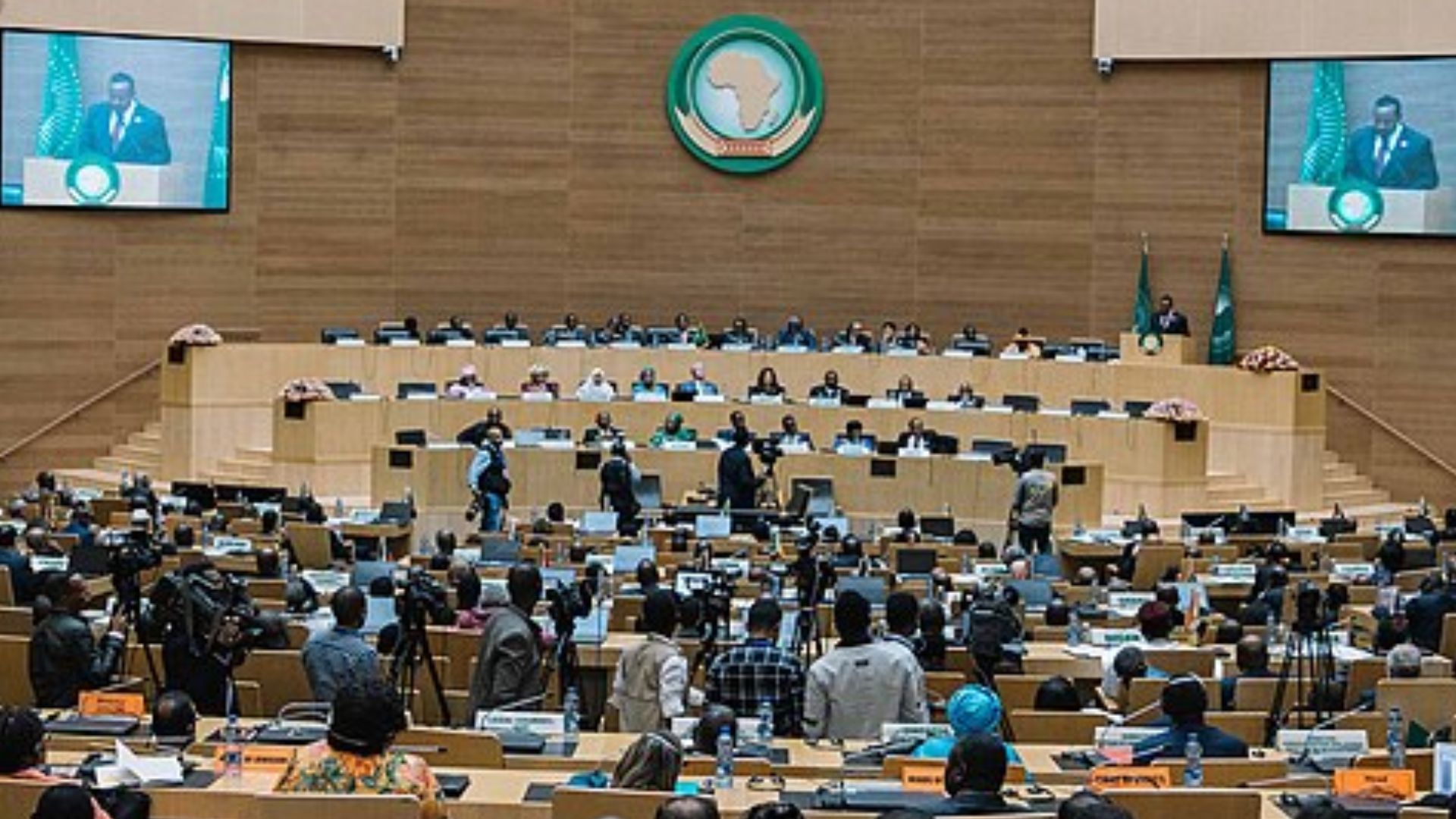
At the core of the African Union’s dysfunction lies its leadership, and, more importantly, whom it serves. The AU does not represent African citizens; it represents African regimes. It is therefore unsurprising that the organisation is unwilling to confront authoritarianism or democratic backsliding. The African Union is composed of leaders who, more often than not, came to power through deeply undemocratic means and who have a vested interest in ensuring that such methods remain unchallenged.
Many of these leaders maintain their grip on power through violence, crushing political opposition, silencing the media, repressing human rights activists, and brutalising their own citizens in the process. As a result, while the African Union may issue calls for peace and stability, the very halls in which these declarations are made are occupied by individuals with blood on their hands. Meaningful action against corruption is equally unlikely when those who have benefited most from corrupt systems are the same individuals who control the institution meant to address them.
The reason these abuses are enabled and legitimised by the African Union lies in its unwavering commitment to the principles of “sovereignty” and “territorial integrity.” In theory, these concepts exist to protect peoples and nations from external domination. Properly understood, respect for sovereignty and territorial integrity means that the citizens of a country retain the ultimate right to determine their laws, institutions, and political future.
In practice, however, African political leadership has hollowed out these principles of their original meaning. Sovereignty and territorial integrity have come to be interpreted not as protections for the people, but as shields for those in power. Under this distorted understanding, leaders are free to loot public resources, destroy land for private profit, imprison political opponents, suppress dissent, and deploy violence against their own citizens, all under the banner of “non-interference in internal matters.”
Because the African Union is composed of these same leaders, it inevitably reflects their priorities. It exists not to challenge authoritarianism, but to normalise it; not to protect African citizens, but to protect African regimes. This is why the AU continues to legitimise repression while offering little more than symbolic gestures in response to suffering and injustice. The African Union is not malfunctioning. It is operating exactly as it was designed to.
An organisation born out of the ideals of liberation and African self-determination has devolved into one that shields regimes guilty of the very abuses once associated with colonial rule. For this reason, the next time someone dismisses the African Union as “useless,” they should be corrected. The AU is not ineffective. On the contrary, once its true purpose is understood, it becomes clear just how effective the organisation has been at fulfilling it.