We are coming to the end of 2025, and it seems worthwhile to look back over the events of the last year and see what we can learn.
- Incumbents have held onto power across Africa
Perhaps the most defining feature of 2025 has been the increasingly undemocratic nature of elections across much of the African continent. The contrast with the previous year is striking. 2024 was widely framed as a “year of elections” globally, with roughly half of the world’s countries going to the polls. In many of those contests, incumbents were decisively rejected. Voters ushered in new leadership in countries such as the United States, Japan, South Korea, France and Portugal, signalling a broader global appetite for political change.
Africa initially appeared to be moving in a similar direction. In 2024, ruling parties were voted out in Botswana and Ghana, while in South Africa, the African National Congress failed to secure a parliamentary majority for the first time in South Africa’s post-apartheid history. If 2024 could be characterised as a year of political turnover, 2025 has represented a sharp reversal of that trend, particularly in the African context.
With the notable exception of Malawi’s national elections, nearly every major election held across the continent in 2025 has resulted in incumbents retaining power, often through processes that fall well short of democratic standards. Across multiple countries, opposition figures have been harassed, arrested, intimidated, or barred from contesting elections altogether, severely undermining the credibility of the electoral process.

In several cases, the outcomes have been so implausible that there is little room for debate about their undemocratic nature. In Gabon, President Brice Oligui Nguema was declared the winner with an extraordinary 90 per cent of the vote. In Burundi, the ruling CNDD-FDD party reportedly secured 97 per cent of the vote, winning every seat in the National Assembly. Similarly, in the Comoros, the ruling CRC party retained its parliamentary dominance by winning 31 of 33 seats in an election widely boycotted by opposition parties, who cited escalating authoritarianism and an uneven political playing field.
Perhaps the election that most clearly illustrated the depth of democratic backsliding in 2025 was Tanzania’s presidential election. The vote was preceded and accompanied by a systematic crackdown on political opposition: major opposition parties were barred from contesting, social media platforms were shut down, and opposition leaders and activists were arrested. Reports also emerged of opposition members being killed, alongside the deaths of potentially hundreds of protesters during the unrest surrounding the election. Against this backdrop, incumbent President Samia Suluhu Hassan was declared the winner with an extraordinary 98 per cent of the vote, a result that has come to symbolise Tanzania’s accelerating slide into authoritarianism under the long-ruling Chama Cha Mapinduzi (CCM) party.
One of the most visible consequences of this entrenchment of incumbents is the widening age gap between Africa’s political leadership and its citizens. The most striking examples in 2025 were the re-elections of Alassane Ouattara, aged 83, in Côte d’Ivoire, and Paul Biya, aged 92, the world’s oldest serving president, in Cameroon. These outcomes stand in stark contrast to the demographic reality of the African continent, which remains the youngest and fastest-growing population in the world. Yet, political power continues to be concentrated in the hands of leaders who have governed for decades, often without any meaningful competition.
Such undemocratic elections do not occur in isolation. They reinforce a longstanding pattern of corrupt, self-serving leadership that has characterised much of Africa’s post-independence political history. Rather than laying the foundations for growth, institutional stability, and sustainable development, many of our governments remain preoccupied with personal enrichment and the preservation of their power. The result is a continent where our vast potential remains unrealised, underdevelopment persists, and poverty continues to shape the lives of millions.
If Africa is to offer a meaningful future to our rapidly growing youth population, the undemocratic nature of governance across the continent must be confronted directly. What is needed are governments that are genuinely accountable to the citizens they claim to serve. At present, political power in many states is sustained not by popular consent, but by alliances between our governments and security establishments in the police and military. Only through genuinely democratic systems of government can Africa begin to build transparent, accountable institutions capable of delivering for their people rather than protecting entrenched elites.
- The embrace of military dictatorship/ strongman politics
The crisis of democratic governance across Africa in 2025 is inseparable from a second, closely related trend: the resurgence of military dictatorship and the growing appeal of strongman politics. Nowhere has this been more visible than in the Sahel, and nowhere has it been more enthusiastically celebrated, particularly online, than in the case of Burkina Faso’s military ruler, Ibrahim Traoré. Over the course of 2025, Traoré’s profile rose dramatically among younger Africans on social media, with thousands of posts and millions of engagements praising his image as a decisive, anti-imperialist strongman.
This resurgence has taken place against a backdrop of deepening insecurity across the Sahel, driven by the expansion of heavily armed jihadist groups and the failure of civilian governments to contain them. A wave of military coups has swept the region, with juntas exploiting public frustration and fear to justify their seizures of power. These regimes have presented authoritarian rule as a necessary corrective, arguing that only strongman leadership can restore order, defeat terrorism, and uproot entrenched corruption.
The consolidation of military rule has also had significant regional consequences. In a dramatic break from the post-Cold War consensus on constitutional governance, the military rulers of Burkina Faso, Mali, and Niger withdrew from the Economic Community of West African States (ECOWAS), forming a new bloc known as the Alliance of Sahel States (AES). At the same time, coups in Guinea and Guinea-Bissau resulted in the suspension of both countries from ECOWAS, further weakening one of Africa’s most important regional institutions.
These juntas have also ridden, and actively cultivated, a powerful wave of anti-French sentiment across West Africa. Since independence, France has maintained extensive economic, political, and military influence in its former colonies, a reality increasingly criticised as neocolonialism. Sahelian military leaders have weaponised this resentment to sever diplomatic, economic, and security ties with Paris. By 2025, this culminated in the complete withdrawal of French troops from West Africa for the first time since the colonial era. A similar hostility has been extended toward the United States, with American forces expelled from Niger following the military takeover.

Yet the retreat of Western influence has not resulted in genuine sovereignty or self-determination. Instead, it has been accompanied by a deepening alignment with Russia. Russian forces, first through the Wagner Group and later via the Russian military’s Africa Corps, have moved into the region, alongside Russian businesses granted access to strategic mining and resource concessions. For Moscow, increasingly isolated following its invasion of Ukraine, the Sahel has become a key arena for geopolitical influence. For the juntas, Russian support has provided security guarantees and regime survival.
Much of the popular support enjoyed by these military rulers, particularly among African youth online, has been fuelled by sustained propaganda campaigns. Social media platforms such as TikTok, YouTube, and Instagram have been flooded with misleading and, in many cases, demonstrably false claims about the successes of military rule. These narratives emphasise defiance, nationalism, and supposed developmental gains, while carefully obscuring a far darker reality.
What is consistently omitted from these portrayals is the deepening authoritarianism of Sahelian military regimes; the continued loss of civilian life at the hands of both jihadist groups and state forces; rising corruption; and the steady deterioration in living conditions. Human rights organisations have repeatedly accused Burkina Faso’s military and allied militias of massacring unarmed civilians. In Mali, the capital, Bamako, has endured a prolonged siege by militant groups, disrupting food and fuel supplies and forcing schools to close. In Niger, the junta has failed to make meaningful progress in reversing the spread of insurgent violence since taking power.
Moreover, the central justification offered for breaking ties with France, the alleged exploitation of African resources, rings hollow when viewed alongside the actions of these regimes. The AES juntas have opened their countries to Russian extraction interests under similarly opaque and unequal arrangements, while relying on Russian mercenaries as personal security forces to shield them from domestic opposition.
Ultimately, the renewed embrace of strongman politics may prove to be one of the most damaging legacies of 2025. Africa’s post-colonial history is replete with cautionary tales of military rulers who seized power promising stability, anti-corruption reforms, and national renewal, only to entrench themselves, plunder state resources, and govern through repression. The events of 2025 suggest that, once again, the continent risks repeating a familiar and costly mistake.
- The abandonment of Sudanese Civilians
One of the most damning legacies of 2025 has been the near-total abandonment of Sudanese civilians to a brutal civil war and an accompanying campaign of ethnic violence. For more than two years, Sudan has been consumed by a conflict between rival military factions, while the Rapid Support Forces (RSF) have waged what many observers describe as a genocidal campaign against non-Arab communities, particularly in Darfur. Despite receiving limited and sporadic international attention, this war has almost certainly become one of the deadliest humanitarian catastrophes of this generation.
Over the course of the conflict, hundreds of thousands of civilians are believed to have been killed, with millions more displaced from their homes. Those who have survived face a relentless cycle of famine, disease, and insecurity. Entire communities have been uprooted, and daily survival has become a struggle defined by scarcity and fear. The scale of suffering is so immense that it becomes difficult to grasp, or to meaningfully compare, the fates of those who have died and those condemned to endure life amid such devastation.
The atrocities committed against civilians, particularly by the RSF, have reached such levels of brutality that massacres and mass graves have been identified even through satellite imagery. These crimes, carried out with apparent impunity, represent a profound failure of both regional and international mechanisms meant to protect civilian populations.
Perhaps most disturbing is the growing sense that African suffering has become increasingly invisible to the world. An estimated 25 million Sudanese now face acute hunger and starvation, yet such figures barely register in global political discourse. Two decades ago, the genocide in Darfur briefly captured international attention; today, a renewed campaign of ethnic cleansing in the same region is met with near silence. Desensitisation, fatigue, and selective outrage have combined to render one of the world’s worst crises largely ignored.

This lack of attention has had tangible consequences. International aid agencies have struggled to raise sufficient funds to support displaced Sudanese civilians. In fact, assistance has declined even as the crisis has deepened, exacerbated by policy shifts in major donor countries, including the reduction of US foreign aid under the Trump administration. As a result, humanitarian operations remain dangerously under-resourced more than two years into the war.
Yet it is difficult to place the blame solely on the international community when African leadership itself has largely failed the Sudanese people. The architects of the violence have not been isolated or condemned; instead, they have at times been welcomed by fellow African leaders. In February 2025, Kenya’s president hosted Mohamed Hamdan Dagalo (“Hemedti”), the head of the RSF, in Nairobi, despite widespread allegations of ethnic cleansing in West Darfur. Similarly, Ethiopia’s prime minister met with Sudanese military chief Abdel Fattah al-Burhan in July of the previous year, lending diplomatic legitimacy to one of the principal actors in the conflict.
Such engagements raise an uncomfortable question: how can meaningful outrage be demanded from the international community when regional leaders themselves normalise and legitimise those responsible for mass atrocities? Time and again, African leaders have responded to violence not with condemnation or collective pressure, but with silence, or worse, with photo opportunities alongside alleged perpetrators.
This failure of solidarity is perhaps the most alarming dimension of the Sudanese tragedy. Today, it is Sudan’s civilians who are being sacrificed, but tomorrow the same dynamics could unfold elsewhere on the continent. This war is not driven by ideology or popular support; most Sudanese reject both sides of the conflict. At its core, the fighting is a struggle over power, wealth, and control of the state, waged at the expense of an entire population. That such a catastrophe can persist for years with so little consequence for its perpetrators stands as a devastating indictment of both regional and global political systems in 2025.
- The cooling of US-Africa relations under Donald Trump
No individual has dominated global headlines in 2025 quite like US President Donald Trump, a figure who has shaped international politics not only this year but for much of the past decade. Trump’s second term has been defined by an intensified “America First” doctrine, one that has fundamentally reshaped the United States’ relationship with the rest of the world. One of the clearest consequences of this foreign policy shift has been the accelerated cooling of relations between Washington and African governments.
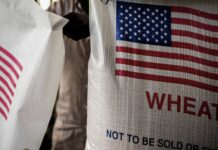
One of the earliest and most consequential decisions of the Trump administration was the dismantling of the United States Agency for International Development (USAID). The agency came under scrutiny after Elon Musk and staffers affiliated with the Department of Government Efficiency (DOGE) took an interest in its operations. What initially began as a 90-day pause on foreign aid disbursements, ostensibly to conduct an audit, ultimately culminated in the complete dissolution of USAID.
The repercussions of this decision have been profound, particularly across Africa, where millions of people have long depended on USAID-supported programmes. The agency played a critical role in food assistance, medical aid, public health initiatives, environmental projects, and trade facilitation. Historically, USAID funding for Africa alone amounted to roughly $8 billion annually, making it a cornerstone of humanitarian and development efforts across the continent.
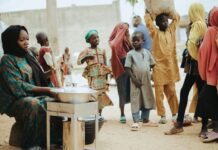
The impact of its removal has already been felt. In northern Nigeria, the World Food Programme has warned that over 30 million people are at risk of starvation, after being forced to shut down major operations due to funding shortfalls. Across Southern Africa, HIV/AIDS clinics and medical research initiatives have closed as financial support dried up. In Sudan, millions of civilians displaced by the ongoing civil war have seen their already limited food assistance sharply reduced.
Beyond humanitarian aid, Trump’s economic policy has further strained relations with Africa. On what the administration termed “Liberation Day”, the United States imposed sweeping tariffs on countries accused of “taking advantage” of American trade. African nations were among the hardest hit. Lesotho faced a 50 per cent tariff, Madagascar 47 per cent, Mauritius 40 per cent, and Botswana 37 per cent. Larger economies were not spared: South Africa was subjected to a 30 per cent tariff, while Nigeria faced a 14 per cent levy.
The impact of these measures has been particularly severe for smaller economies. Lesotho, whose textile industry is heavily dependent on exports to the US market, experienced immediate economic disruption. Rising unemployment and uncertainty prompted the government to declare a state of disaster, underscoring the vulnerability of export-reliant African economies to unilateral trade actions by global powers.
Immigration policy has provided another point of tension. As part of the Trump administration’s mass deportation agenda, several African countries have been used as third-party destinations for deported migrants. Throughout 2025, individuals were deported to Rwanda, Lesotho, and Eswatini, while other African governments were reportedly pressured to accept similar arrangements. At the same time, Trump has publicly reaffirmed his commitment to ending what he termed “third-world migration” to the United States, with African nations among those most affected by expanded travel bans.

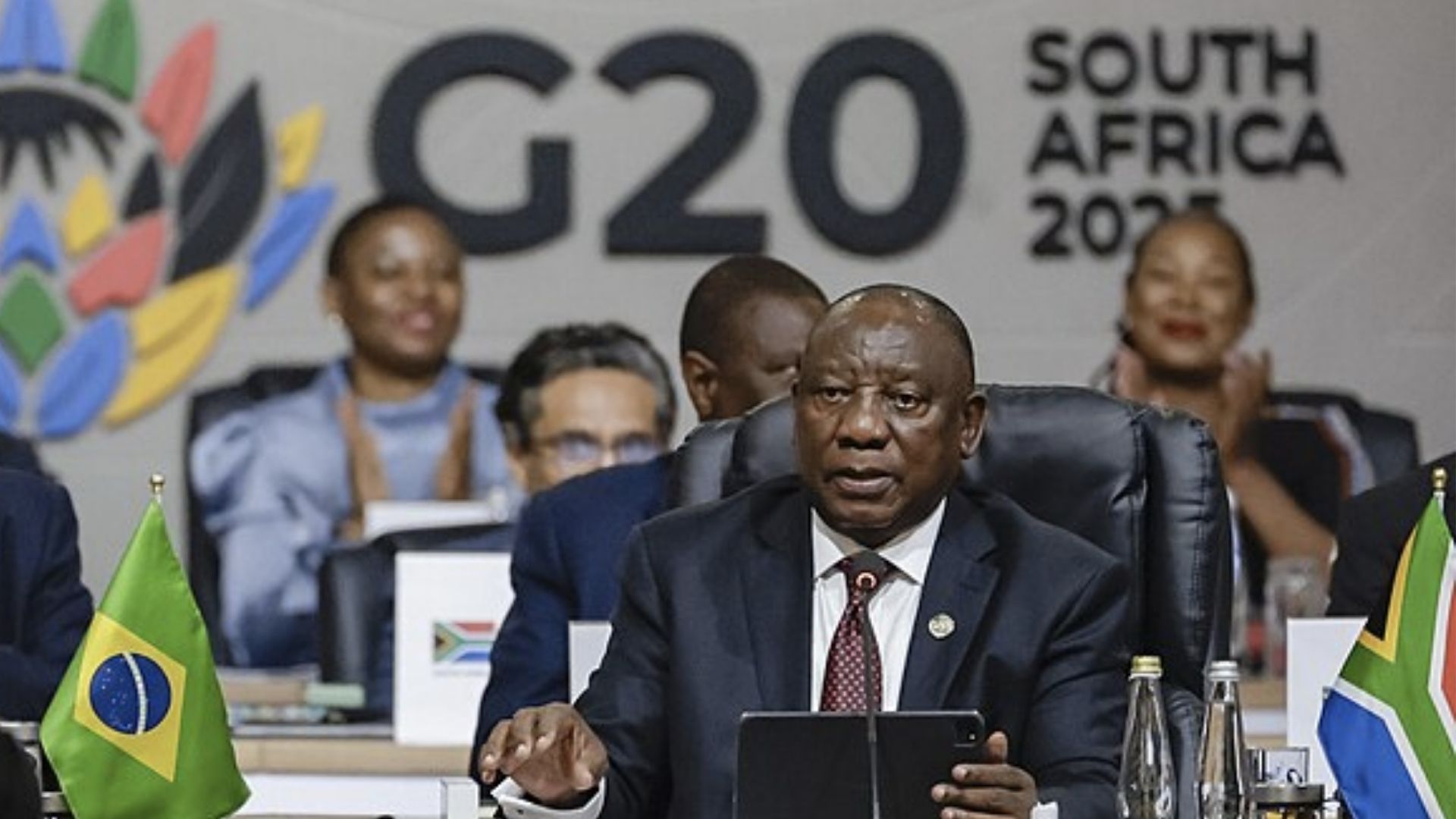
Rhetorically, relations deteriorated further as the US president adopted an increasingly confrontational tone toward specific African states. Trump accused South Africa of presiding over a so-called “white genocide,” claims that culminated in a highly contentious Oval Office meeting with President Cyril Ramaphosa. He later accused Nigeria of tolerating a “Christian genocide,” threatening unilateral US action against militant groups operating within the country. Most recently, Trump targeted Somali migrants, stating that he did not want them entering the United States and telling them to “go back to where they came from,” describing Somalia as “no good for a reason.”
While relations between the United States and African governments have not always been warm, 2025 marked a clear and significant rupture. Through aid withdrawals, punitive trade policies, aggressive immigration measures, and inflammatory rhetoric, the first year of Trump’s second term has overseen a marked deterioration in US–Africa relations.
- The era of mass migration is ending
The final key takeaway from 2025 is that the era of large-scale, permissive migration to the developed world is drawing to a close. Across much of the Global North, immigration has become one of the most volatile and defining political issues of the past decade. High levels of migration, particularly from the developing world, have triggered a sustained backlash, reshaping electoral politics in countries that were once broadly receptive to migrants.
Nowhere has this been more evident than in the United States. Immigration played a decisive role in Donald Trump’s re-election, following record levels of migration at the US southern border during the Biden administration. Since returning to office, the Trump administration has moved aggressively to shut down access to asylum, with officials claiming multiple consecutive months of near-zero attempted border crossings. Whether framed as border security or deterrence, the message from Washington has been unequivocal: the door is closing.
A similar shift is underway across Europe, where anti-immigration parties have translated public frustration into electoral success. In Germany, the far-right Alternative für Deutschland (AfD) secured the second-highest share of the vote in national elections. Elsewhere, parties campaigning on deportations, border controls, and asylum restrictions continue to gain ground. In the United Kingdom, Nigel Farage’s Reform UK is widely expected to be a major contender, if not the outright favourite, in the next general election. Beyond the West, Japan has also signalled a harder line, with Prime Minister Sanae Takaichi pushing for stricter immigration controls despite the country’s demographic challenges.
Taken together, these events point to a broader structural shift rather than a temporary political mood. The dominant approach of the past decade, which has been one defined by relatively open asylum systems and large-scale migration flows from the Global South to the Global North, is being replaced by much stricter restrictions, deterrence, and enforcement. While migration will never cease altogether, the political conditions that once enabled mass movement are rapidly disappearing.
For countries in the developing world, this shift carries profound implications. Migration has long served as a safety valve for unemployment, conflict, and economic instability. As access to destination countries narrows, the pressure to address governance failures, inequality, and economic opportunity at home will only intensify. In this sense, 2025 may be remembered as the year the global migration regime decisively hardened, closing a chapter that defined much of the early 21st century.
Taken together, the events of 2025 paint a sobering picture of a world that is moving away from democratic accountability and collective responsibility. Across Africa, incumbents have entrenched themselves through undemocratic elections, military rulers have been celebrated as saviours, civilians have been abandoned to war and famine, and international partners have retreated behind walls of nationalism and self-interest.
At the global level, shifting power dynamics and hardening borders have further narrowed the space for democratic solidarity, mobility, and humanitarian action. The consequences of these trends will not be felt in abstract, but in the daily lives of millions of young people in particular, whose futures are being shaped by decisions made without their consent. The challenge ahead is whether 2026 will mark a continuation of these trends or the beginning of a renewed commitment to accountability, dignity, and democratic governance.