One of the most detrimental features of African politics is the relationship our societies have with political leadership. Across much of the continent, political systems remain deeply authoritarian in both structure and practice. In reality, ordinary African citizens wield little to no meaningful power over the actions of their governments. Instead, we are relegated to the role of spectators, watching decisions being made in distant capitals by political elites, only to bear the consequences of those decisions made without our consent or participation.
Despite widespread public frustration, fuelled by decades of corruption, mismanagement, and elite capture, there are limited avenues through which ordinary citizens can hold their governments accountable. This is because political power in many African states does not flow from the consent of the governed, but rather from control over the instruments of coercion. The military and police, institutions that ought to serve and protect the population, are frequently weaponised by ruling elites to suppress dissent and entrench their hold on power.
The struggle for democracy and republican ideals to take root in Africa is not without historical context. Prior to colonialism, much of the continent was organised around kingdoms, empires, and chieftaincies, with governance systems that bore closer resemblance to feudal hierarchies than to modern democratic structures. Colonial rule then imposed foreign domination for over a century, during which African political development was deliberately stunted and subordinated to imperial interests.
It was only towards the end of the colonial period that concepts such as democracy, self-determination, and popular sovereignty were seriously contemplated for newly independent African states. However, this transition was always bound to be difficult. Democratic institutions were abruptly imposed in societies that had little historical experience with them, while colonial borders grouped together diverse ethnic, linguistic, and cultural communities into single states. These artificial political arrangements created fertile ground for competition, exclusion, and ethnic conflict.
Unsurprisingly, the post-colonial era did not usher in an immediate expansion of civil liberties. Instead, many African states descended into prolonged periods of political instability, civil war, and authoritarian rule. In environments where there is little respect for electoral outcomes or judicial independence, political power tends to be decided not by ballots or laws, but by brute force. Whoever commands greater manpower and coercive capacity ultimately prevails.
Yet authoritarianism in Africa is not sustained by state violence alone. It is also reinforced by societal and cultural attitudes toward power and politics. Too often, political leaders are elevated beyond scrutiny, treated as patrons, saviours, or even messianic figures rather than as public servants accountable to the people. This culture of political worship provides the social permission structures that allow authoritarianism to flourish long after independence.
One of the most powerful permission structures sustaining authoritarianism in Africa is tribalism. Many African states contain numerous ethnic and religious groups that were forcibly grouped together during the colonial era. Political elites have long exploited these divisions to secure and retain power. While leaders actively cultivate tribal and sectarian loyalties, they succeed largely because many citizens continue to operate under the false assumption that leaders who share their ethnic or religious identity will necessarily improve their material conditions.
A cursory examination of political outcomes across the continent exposes this belief as a fallacy. A politician’s worth should never be measured by their identity, but by the merit and viability of their ideas. Time and again, politicians exploit ethnic and religious affiliation by promising prosperity to “their people,” only for poverty to remain widespread while a small, well-connected elite benefits from state power. Tribal loyalty, in practice, has proven to be an ineffective substitute for sound governance.
The consequences of this form of politics are severe. Tribalism deepens social divisions, heightens the risk of political violence, and allows for unqualified and opportunistic individuals to rise to power simply because they are the ones most willing to mobilise identity-based grievances to gain power. Even more troubling is the tendency of citizens to excuse corruption, repression, and authoritarianism when the perpetrator happens to belong to their own tribe or religious group.
Closely related to this is another permission structure: ideological polarisation. This is perhaps most evidenced by the Americas, where ideological tribalism has also proven deeply destructive. In South America, for instance, sharp divisions between left-wing and right-wing movements have repeatedly contributed to civil conflict, military coups, and successive authoritarian regimes. When political competition becomes an existential ideological battle, democratic norms are often the first casualty.
When citizens prioritise ideological victory over democratic principles, the outcome is predictable. In a truly democratic society, the protection of democratic institutions must take precedence over any ideological alignment. A democratic leader who upholds civil liberties, free expression, and the rule of law is always preferable to an authoritarian ruler who merely agrees with one’s economic or social views.
Religious institutions have also been manipulated as permission structures for authoritarian rule. One particularly troubling phenomenon within many African Christian communities is the belief that political leaders are divinely appointed by God. This idea is frequently promoted by church leaders during election periods, often citing Romans 13:1: “Let everyone be subject to the governing authorities, for there is no authority except that which God has established.”
This verse is commonly interpreted to mean that all political authority is sanctioned by God and must therefore be obeyed without question. African rulers have eagerly embraced this interpretation to demand unquestioning loyalty from citizens. As a result, the Christian Church, both intentionally and inadvertently, has at times functioned as a tool for political control rather than as a moral counterbalance to state power.
However, this interpretation represents a misreading of the biblical text. Taken to its logical conclusion, it could be used to justify obedience to even the most brutal and fascistic regimes. Most biblical scholars argue that the passage is a call for Christians to respect the law and act as responsible citizens, not to submit blindly to injustice or state violence. In Christian theology, ultimate authority rests with God, not with political institutions.
Similarly, in many predominantly Islamic societies, the separation between religion and the state is often weak or entirely absent. Religious authorities may wield state power to enforce doctrinal conformity, while political elites manipulate religious institutions to legitimise their rule. This fusion of religion and state power enables extensive control over citizens’ private lives and suppresses dissent under the guise of moral or religious obligation.
In all these cases, the manipulation of faith, whether Christian or Islamic, amounts to the instrumentalisation of sacred beliefs for political survival. Such practices represent not only an abuse of power, but also an intrusion of the state into deeply personal matters of conscience and belief, all for the short-term benefit of political elites.
Yet perhaps the most significant permission structure of all is the widespread misunderstanding of what elected officials are meant to be. Across much of Africa, there exists a deeply entrenched belief that politicians are rulers to be obeyed, rather than servants accountable to the public. This mindset stands in direct opposition to the principles of republicanism.
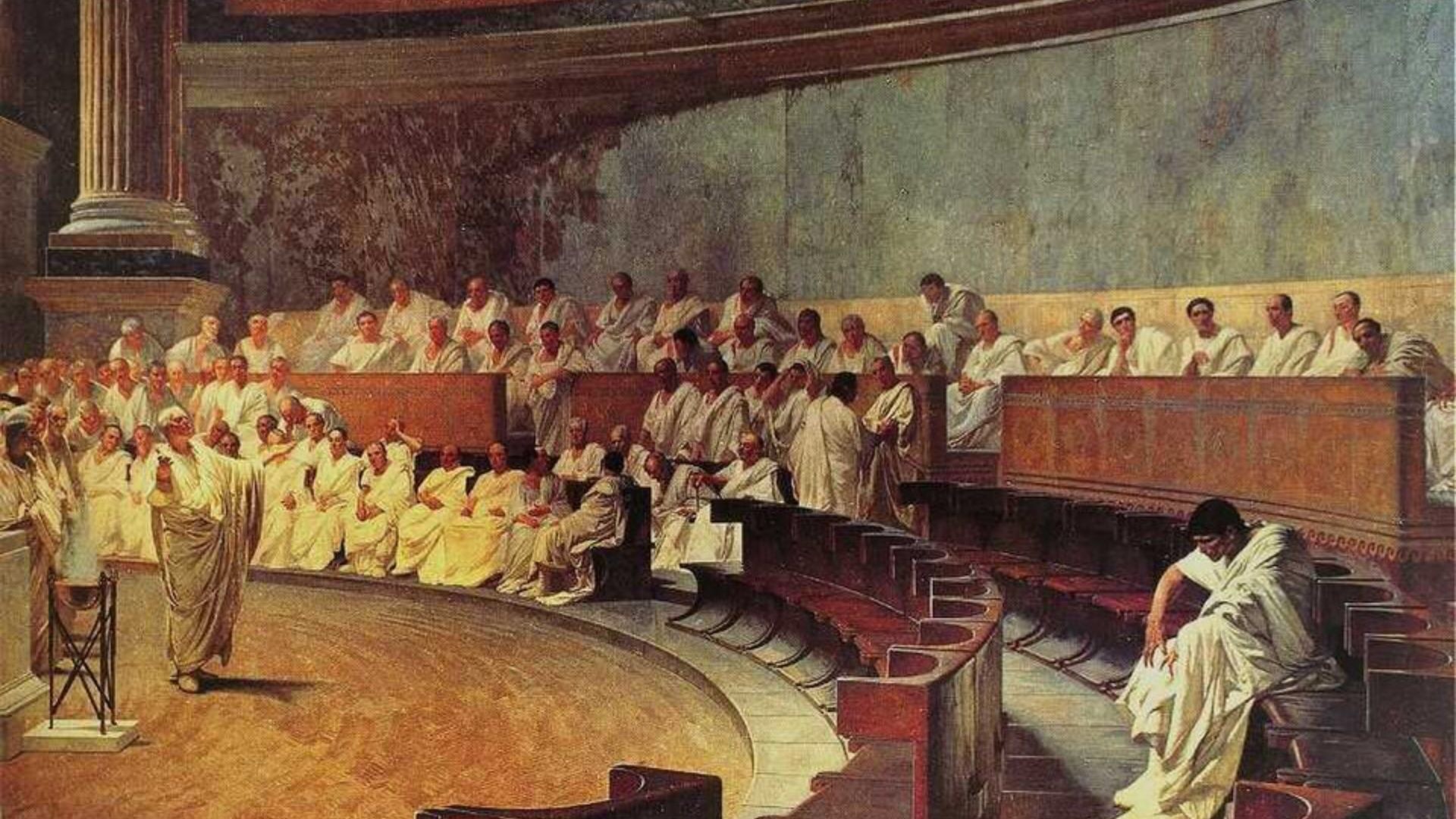
Elected officials do not exist to rule over citizens; they exist to serve them. Their legitimacy derives not from personal authority or divine favour, but from their role as representatives entrusted to act on behalf of the people. Republicanism, which traces its roots to ancient Rome, was founded on the idea that representatives are chosen to govern in the public interest, precisely because direct democracy is impractical on a large scale.
Crucially, Roman republican tradition emphasised public service, civic duty, and accountability. Representatives were expected to work at the behest of citizens, not the other way around. Until African societies are able fully embrace this understanding of political power, authoritarianism will continue to find both justification and shelter within our political culture.
Authoritarianism in Africa does not endure solely because of corrupt leaders or coercive state institutions. It survives because it is repeatedly enabled—socially, culturally, and politically—by the very societies it governs. Tribal loyalty, ideological absolutism, religious manipulation, and a fundamental misunderstanding of the role of elected officials all function as permission structures that allow politicians to rule without accountability.
Until Africans collectively reject the notion that shared identity is a substitute for good governance, or that ideology justifies the erosion of democratic norms, meaningful political reform will remain elusive. No tribe is inherently destined to govern better than another. No ideology is worth sacrificing civil liberties for. No religious text grants politicians moral immunity from criticism or resistance. Power that cannot be questioned will always be abused.
At its core, republican governance demands a radical shift in political culture. Politicians are not patrons, saviours, or divinely appointed rulers; they are employees of the public, entrusted with temporary authority and must be subject to constant scrutiny. Citizens do not exist to serve the state; the state exists to serve its citizens.
If Africa is to move beyond the cycle of authoritarianism that has defined much of its post-independence history, this understanding must become non-negotiable. Democracy cannot function where leaders are worshipped and accountability is treated as betrayal. The moment African societies insist on service rather than reverence is the moment genuine democratic governance can finally begin.