For well over half a century, the United States has occupied a unique position in global affairs. Following the end of the Cold War and the collapse of the Soviet Union, its status as the world’s foremost superpower was firmly cemented. Militarily, the United States projects power far beyond the Western Hemisphere, maintaining a global presence unmatched by any other nation. Economically, it is home to many of the world’s largest and most influential corporations, companies that shape the daily lives of billions through social media, finance, telecommunications, science, mining, and technology.
The United States is also the world’s largest economy, and its domestic political decisions frequently reverberate across global markets. This was evident when US President Donald Trump’s trade war and sweeping tariff policies sent shockwaves through economies far beyond America’s borders. Beyond economics and military power, however, the United States exerts immense cultural influence. American films, music, celebrities, and social media personalities are consumed worldwide. American political figures are global figures, with international audiences closely following the daily dramas unfolding in Washington.
From gaming and higher education to technological innovation, American influence is deeply embedded in global life. Even the continued dominance of the English language owes much to the reach of American culture. In this sense, American culture is no longer merely a national phenomenon, but also a global phenomenon.
Yet this dominance has not come without significant costs. During the Cold War, the United States and the Soviet Union fought a series of proxy wars across the globe. In its effort to counter communism, the United States supported or facilitated the rise of authoritarian regimes in several countries. One of the most cited examples is Chile under Augusto Pinochet, where an anti-communist dictatorship was backed despite widespread human rights abuses. While the United States did play a positive role in rebuilding and supporting democratic institutions in countries such as Germany, Japan, South Korea, and Panama, many of the darker episodes of Cold War intervention remain deeply etched in global memory. Conflicts such as the Vietnam War continue to shape perceptions of American power both at home and abroad.
In the post–September 11 era, the “War on Terror” further complicated America’s global reputation. Prolonged military engagements against Islamist militant groups, particularly in Iraq and Afghanistan, proved costly and deeply controversial. The Iraq War, justified by misleading claims about weapons of mass destruction, and the mismanagement of the post-Saddam Hussein transition contributed to sectarian violence and the eventual rise of ISIS. This, in turn, necessitated yet another U.S.-led intervention. Similarly, interventions in Libya and Afghanistan failed to deliver lasting stability or democratic governance, further eroding trust in American intentions.
These conflicts now sit at the center of contemporary anti-Americanism. Whatever strategic or humanitarian motivations may have informed U.S. interventions are often flattened in popular discourse into a single cynical narrative: that America acts solely to advance its own economic interests, particularly oil. In this telling, deposed dictators such as Muammar Gaddafi are retrospectively rebranded as heroic anti-imperialists, with their records of repression, corruption, and violence conveniently ignored.
This mindset has also fostered an instinctive scepticism toward any U.S. commentary on global affairs. A recent example can be seen in Nigeria, where warnings by U.S. officials about the growing threat of Islamist terrorism were quickly dismissed by some as a cover for American interest in Nigeria’s oil. The possibility that such warnings might stem from any genuine concern over mass killings, abductions, and regional instability was brushed aside in favour of a familiar narrative of exploitation.
Anti-Americanism has also become a convenient political tool for deflecting blame. Across many countries, corruption, insecurity, electoral failures, and social unrest are routinely attributed to shadowy CIA conspiracies. For some political actors and influencers, the CIA functions as an all-purpose scapegoat, an external villain that absolves local elites of responsibility for their own failures.
The reaction to popular protests in Iran illustrates this dynamic clearly. Iranian citizens have repeatedly demonstrated against an authoritarian theocratic regime that enforces a rigid fundamentalist interpretation of Islam, restricts women’s rights, suppresses dissent, funds militant groups abroad, and has driven the country into economic crisis through international isolation and sanctions. Protesters have demanded freedom, democracy, and an end to clerical rule. Yet many anti-American commentators have sought to delegitimise these demands by dismissing the protests as a “colour revolution,” alleging CIA orchestration. Some have even gone so far as to openly support the Iranian government, not because of its treatment of its own people, but solely because of its opposition to the United States and Israel.
In this way, anti-Americanism often shifts from legitimate criticism of U.S. foreign policy into something far less principled: a reflexive worldview in which America is always the villain, its adversaries are automatically absolved, and the lived realities of people suffering under authoritarian regimes are reduced to mere footnotes in a geopolitical grudge.
However, perhaps the greatest problem with anti-Americanism is not criticism of the American state itself, but the way that criticism often expands to encompass everything associated with the United States. In this framing, ideas such as democracy, liberalism, capitalism, and individual rights are treated not as universal political concepts, but as inherently American and therefore inherently suspect. As a result, these ideas are increasingly demonised alongside the United States itself.
There exists also a deep irony here. Anti-Americanism has become as much an American phenomenon as it is a global one. Within the United States, there have been growing efforts to delegitimise the very foundations of the American project. In confronting the country’s historical injustices: slavery, racial segregation, Japanese internment camps, the long struggle for women’s rights, and many other failures. However, some of these narratives go beyond criticism and instead portray the United States as a nation fundamentally and irredeemably rooted in racism, white supremacy, or misogyny.
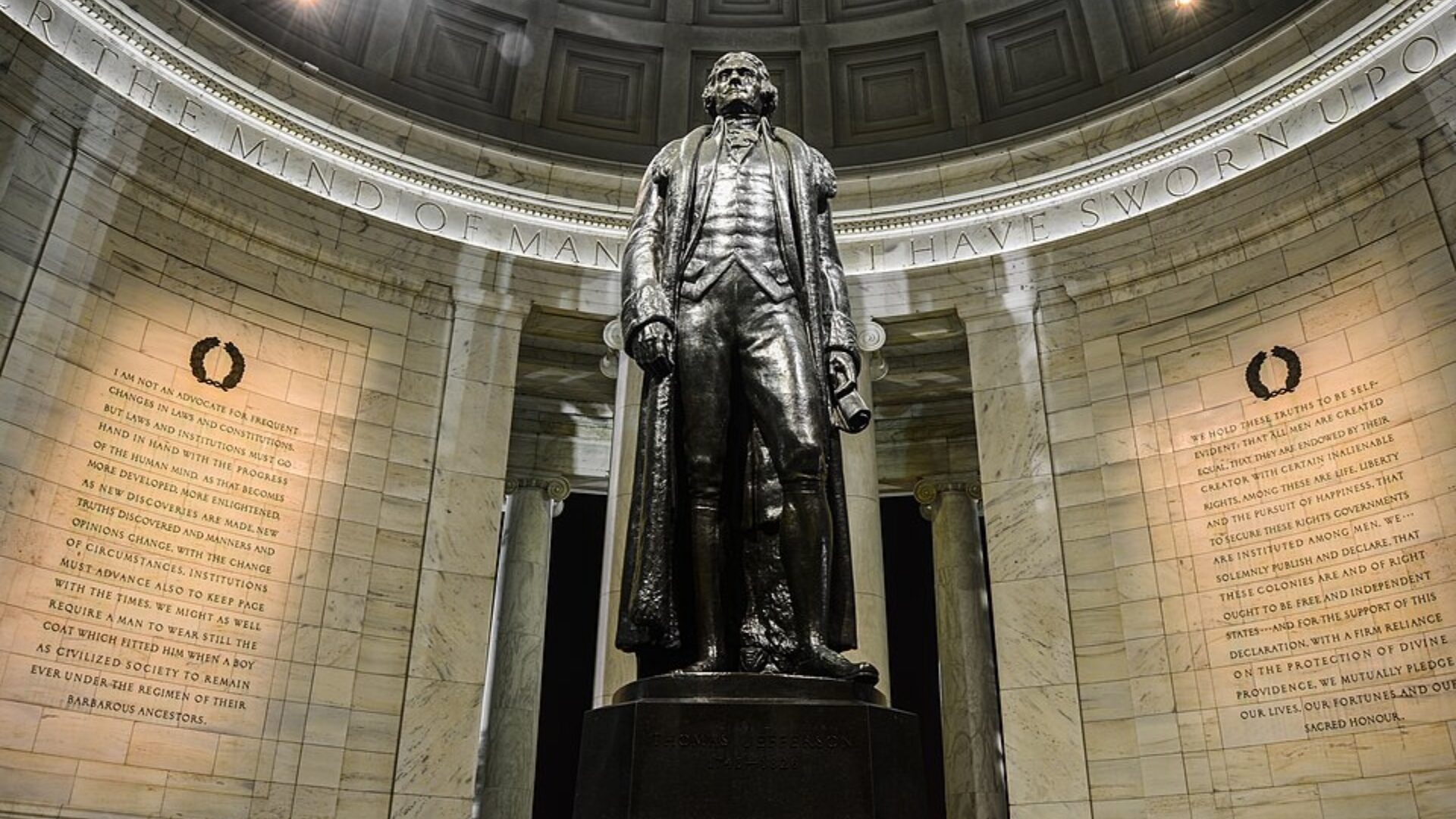
This framing misses a crucial distinction. What made the founding of the United States historically significant was not the immediate elimination of discrimination, but the explicit rejection of it as a moral principle. As enshrined in the Declaration of Independence: “We hold these truths to be self-evident, that all men are created equal, that they are endowed by their Creator with certain unalienable Rights, that among these are Life, Liberty and the pursuit of Happiness.” The persistence of discrimination in American history reflects a failure to live up to these ideals, not evidence that those ideals were fraudulent or insincere.
To conflate America’s shortcomings with the values it professes is to misunderstand the nature of political progress. The very movements that challenged slavery, segregation, and legal discrimination did so by appealing to America’s founding principles, not by rejecting them. In this sense, the struggle for equality in the United States was not an attack on the American experiment, but an attempt to complete it.
In recent years, this erosion of trust has been accelerated by the rise of modern conspiracism. Claims that the U.S. government orchestrated the September 11 attacks, assassinated John F. Kennedy, or operates as a shadow state divorced from democratic accountability have become increasingly mainstream. These narratives are often intertwined with older, antisemitic conspiracy theories alleging that Jewish elites secretly control American political and financial institutions.
More recently, revelations surrounding Jeffrey Epstein have fueled a new wave of conspiracism, suggesting that a hidden network of pedophilic elites governs not only the United States but much of the Western world. While Epstein and his associates’ crimes themselves deserve accountability and transparency, their absorption into sweeping conspiracy frameworks has had a broader effect, which has been the systematic undermining of public faith in democratic institutions, and liberal governance.
Taken together, these narratives do not merely criticise American power, they hollow out the foundational beliefs upon which the United States, and many modern democracies, are built. They also have the affect of seeking to draw moral equivelance between democratic regimes and authoritarian ones. Seeking to claim that there is in practice no real difference between the two.
Anti-Americanism often begins as a response to real and undeniable failures of American power. The United States has intervened recklessly, supported unjust regimes, and at times acted in ways that contradict the values it claims to uphold. These actions deserve scrutiny, criticism, and accountability. But when anti-Americanism hardens into a worldview rather than a critique, it ceases to be useful and becomes intellectually corrosive.
At its most extreme, anti-Americanism collapses important distinctions: between a state and its ideals, between power and principle, between historical failure and moral aspiration. In doing so, it does not merely reject American foreign policy, it undermines the broader democratic values that millions of people around the world continue to struggle for. Democracy, civil liberties, free expression, and accountable governance are reduced to cynical tools of American dominance rather than universal aspirations with intrinsic value.
This reflexive hostility also produces perverse outcomes. Authoritarian regimes are excused, romanticised, or outright defended simply because they oppose the United States. Popular movements demanding freedom and dignity are dismissed as foreign plots. Corruption, repression, and incompetence are externalised and blamed on distant conspirators rather than confronted as domestic failures. In this way, anti-Americanism becomes a convenient shield for power, not a challenge to it.
None of this requires ignoring America’s flaws or denying its history of injustice. On the contrary, meaningful criticism of the United States must be grounded in the very ideals it professes, ideals that have inspired reform movements both within America and far beyond its borders. To reject those ideals outright is not radical; it is regressive.
Ultimately, the problem with anti-Americanism is not that it questions American power, but that it too often abandons critical thinking in favour of ideological certainty.