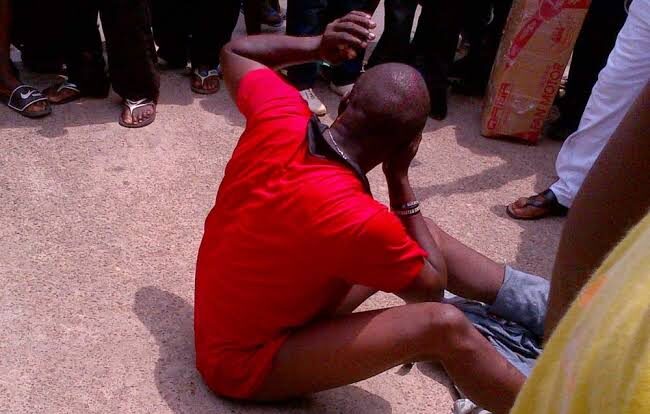
In recent weeks, as is unfortunately not uncommon on Nigerian social media, videos have once again gone viral showing alleged thieves being captured and brutally assaulted by angry crowds. This phenomenon colloquially known as “jungle justice” is a form of vigilante violence in which groups of civilians physically assault, humiliate, and sometimes even execute individuals accused of crimes without any legal trial or judicial process.
Mob justice has become an entrenched feature of life in parts of Nigeria. Although poor record-keeping makes it difficult to determine the true scale of the crisis, human rights organisations believe that thousands of people have been killed or seriously injured by mobs over the years. Reports suggest that such attacks occur with alarming regularity across the country, with densely populated states such as Lagos and Kano recording some of the highest concentrations of incidents.
The motivations behind these lynchings often vary by region. In southern Nigeria, victims are frequently accused of petty crimes such as pickpocketing, phone theft, or burglary, with poverty and economic hardship contributing to both crime and public anger. In northern Nigeria, while suspected thieves are also targeted, mob violence has at times been fuelled by accusations of blasphemy, witchcraft, or other perceived religious and moral offences, often with deadly consequences.
Nor is this solely a Nigerian phenomenon. Having lived in countries across West, East, and Southern Africa, I have repeatedly encountered reports of alleged criminals being beaten or killed by mobs. While the circumstances differ from country to country, the underlying phenomenon is tragically familiar across much of the continent.
In Kenya, for example, the Ministry of Interior and National Administration reported 845 incidents of mob justice between January 2025 and early 2026, resulting in 579 deaths and 266 serious injuries. In South Africa, where the South African Police Service (SAPS) separately records vigilante-related murders, more than 1,200 people have been killed in mob attacks over recent multi-year reporting periods.
The moral case against mob justice should hardly require stating. No society that claims to uphold justice can tolerate punishment without evidence, due process, or the opportunity for the accused to defend themselves. Yet it is equally important to recognise that this violence does not emerge in a vacuum. Across many African countries, persistent distrust of the police and the judiciary,institutions widely perceived as corrupt, ineffective, or inaccessible, has led some communities to take the law into their own hands.
In areas where crime is widespread and state institutions are weak, particularly informal settlements, transport hubs, and busy markets, vigilante violence can become disturbingly commonplace. In South Africa, for example, mob justice has become closely associated with infromal communities affected by gangsterism, high crime rates, and inadequate policing. More recently, violent mobs driven by xenophobic sentiment have also targeted the homes, businesses, and livelihoods of African migrants living in the country.
Research has similarly identified countries such as Ghana, Cameroon, and Nigeria as places where the public lynching of suspected petty criminals particularly in markets and commercial centres has, in some areas, become disturbingly normalised. Every such incident represents not simply an act of violence against an individual but a wider erosion of the rule of law, where constitutional safeguards are abandoned in favour of immediate and often irreversible vengeance.
Understanding these structural causes is important, but it must never become an excuse for the violence itself. A police force or judiciary that is perceived as corrupt or ineffective should be reformed and strengthened, not replaced by the arbitrary judgement of an angry crowd. The moment citizens begin acting as investigators, prosecutors, judges, juries, and executioners, justice ceases to exist.
The English philosopher Thomas Hobbes famously warned that without the rule of law, life becomes “solitary, poor, nasty, brutish, and short.” Mob justice represents precisely that descent into lawlessness. It abandons the principles of due process and human dignity, replacing them with fear, vengeance, and collective violence. In doing so, it diminishes not only its victims but society itself, reducing the value of human life to whatever an angry crowd decides it is worth.
A brief glance at social media reveals that these acts of mob violence often take on an almost sadistic character. Alleged criminals are frequently stripped, publicly humiliated, forced to dance before jeering crowds, sometimes in sexually degrading ways, before being beaten, mutilated, or even burned alive. Such spectacles are often filmed and shared online as entertainment. These are not the actions of a society calmly pursuing justice. They are acts of collective cruelty. As the ancient Greek philosopher Diogenes observed, “The mob is the mother of all tyrannies.”
There is another uncomfortable reality that deserves recognition. Those most likely to become victims of mob justice are often those who already occupy the lowest rungs of society. Many petty crimes are committed by people living in desperate economic circumstances, with few opportunities for stable employment or social mobility. Acknowledging these realities is not to excuse theft or criminality. Rather, it is to recognise that poverty, inequality, and unemployment create conditions in which crime becomes more common. Addressing those underlying conditions is ultimately far more effective than allowing mobs to administer punishment in the streets.
The selective nature of mob justice also exposes a profound moral contradiction. The greatest theft in many African countries is rarely committed by the young man stealing a mobile phone or a wallet. Far greater damage is inflicted by those who embezzle public funds, award fraudulent contracts, loot state resources, or divert money intended for schools, hospitals, roads, and electricity. Such corruption is theft on an industrial scale, depriving entire generations of opportunity and slowing national development.
Yet these individuals are seldom dragged into the streets by angry crowds. Many continue to enjoy wealth, prestige, political influence, and even public admiration. The system that enables petty crime to flourish often protects those responsible for far greater crimes.
Meanwhile, it is the poor and powerless who are subjected to the full brutality of mob violence. As Australian author Victor Kelleher observed, “The face of fear has neither eyes nor ears. It is blind and deaf to all but its own terrors.” Once fear and anger take hold, there is little room for evidence, reason, dialogue, or even the possibility that the accused may be innocent.
This is perhaps the gravest danger of mob justice. Every functioning legal system rests upon the principle that an individual is presumed innocent until proven guilty. A crowd recognises no such principle. Across Africa, innocent people have repeatedly been beaten or killed after being falsely accused, misidentified, or simply finding themselves in the wrong place at the wrong time. Once a mob has passed its verdict, there is rarely any opportunity to correct a mistake. An innocent life lost can never be restored.
Ultimately, mob justice is not a sign of strength; it is a symptom of institutional failure. It reflects societies in which confidence in the police, the courts, and the rule of law has deteriorated to such an extent that citizens believe violence is a substitute for justice. But violence cannot build the trust that functioning democracies require. It can only deepen cycles of fear, revenge, and instability.
If African nations are to build prosperous, secure, and democratic societies, we must reject the false choice between ineffective institutions and mob violence. The answer is not to replace the rule of law with the rule of the crowd, but to reform our police, strengthen our courts, combat corruption, and ensure that justice is applied equally to both the powerless and the powerful. The measure of a civilised society is not how harshly it punishes the weakest among it, but whether every human being: both guilty or innocent, rich or poor, is afforded dignity, due process, and equal protection under the law.
William Penn once wrote, “Passion is the mob of the man that commits a riot upon his reason.” That observation applies equally to societies themselves. When anger replaces justice, and vengeance replaces law, we all become less free. The future of Africa will not be secured by lynch mobs but by strong institutions, accountable governments, and an unwavering commitment to the principle that no person should ever be condemned by a mob.