A little while ago, I had an interesting discussion with my sister about governance in Africa, during which the subject of presidential term limits arose. She questioned whether term limits were necessary at all, arguing that attempts to enforce them across the continent have often proved ineffective. In her view, term limits are largely a Western constitutional construct that has been imposed upon African states, despite being poorly suited to many African political realities.
She argued that limiting the length of time leaders can remain in office is not only unnecessary but may even be counterproductive. Governments, she suggested, should be allowed to remain in power for longer periods so they can pursue ambitious developmental projects that require decades rather than years to bear fruit. Elections, rather than serving as healthy democratic exercises, frequently become sources of political division, instability, and sometimes violence. She pointed to countries such as China, Singapore, and Rwanda as examples where long-term leadership has coincided with rapid economic development and state-building.
These arguments are far from uncommon. Indeed, they have become increasingly widespread, particularly in online political discourse. They form part of a broader belief that highly centralised states are better equipped to achieve Africa’s developmental ambitions. At the centre of this vision is often the image of a decisive, almost messianic leader who can transform a nation if only freed from electoral pressures, constitutional restraints, and bureaucratic obstacles. Yet this perspective often overlooks two important realities: the long history of failed centralised states and the inherent dangers of concentrating political power in leaders who face few meaningful checks on their authority.
Before addressing those dangers, however, it is worth acknowledging that the underlying premise is not entirely without merit. Development is rarely achieved within a single electoral cycle. Building prosperous, resilient societies requires planning and investment over decades, and sometimes even centuries. The greatest powers in history did not emerge through short bursts of political activity but through generations of sustained institution-building, infrastructure development, and knowledge accumulation.

The physical legacies of that long-term planning remain visible today. Ancient Roman aqueducts, some first constructed more than two thousand years ago, continue to supply water to parts of modern Rome. The Aqua Virgo, commissioned by Marcus Agrippa in 19 BC and later restored during the Renaissance as the Acqua Vergine, still feeds iconic landmarks such as the Trevi Fountain. Likewise, China’s Dujiangyan Irrigation System, completed around 256 BC, continues to regulate the Min River, prevent flooding, and irrigate millions of acres of farmland without relying on a modern dam.
Nor is long-term planning confined to the ancient world. The Hoover Dam, completed in 1936, still provides water, flood control, and hydroelectric power to millions of people across the American Southwest. The Panama Canal, opened in 1914, remains one of the world’s most strategically important trade routes more than a century after its construction. Projects such as these demonstrate that the infrastructure underpinning prosperous societies is designed not for election cycles but for generations.

Indeed, this is one of the defining characteristics of successful states. Investments in transportation networks, irrigation systems, power generation, flood protection, and other forms of critical infrastructure are intended to outlive the governments that initiated them. They provide the stability upon which economic growth, scientific advancement, trade, education, and national prosperity are built. Any nation aspiring to sustained development must therefore create political institutions capable of supporting long-term planning and ensuring that such projects continue across successive governments.
This is precisely where the debate over term limits is often misunderstood. The purpose of term limits is not to prevent governments from pursuing long-term development. Nor are they intended to force every new administration to abandon the work of its predecessor. Rather, term limits exist to ensure political accountability. They are based on the principle that while policies and national development strategies may continue for generations, no individual should wield executive power indefinitely without periodically returning that authority to the people.
Too often, critics of term limits frame them as obstacles to development because elected leaders may become preoccupied with the next election instead of the next generation. Yet this criticism conflates two separate questions. The challenge is not whether nations should think long term, they absolutely should, but whether long-term national development requires long-term personal rule. These are not the same thing, and history suggests that confusing the two has often come at a very high cost.
Term limits are, at their core, an accountability mechanism. Their primary purpose is not to prevent governments from pursuing long-term development but to ensure that those entrusted with public office periodically return to the electorate and justify their record. They remind elected officials that political authority is not permanently theirs but is instead delegated by the people for a limited period of time. If voters believe an official has governed effectively, they can renew that mandate. If not, they have the opportunity to replace them with someone else.
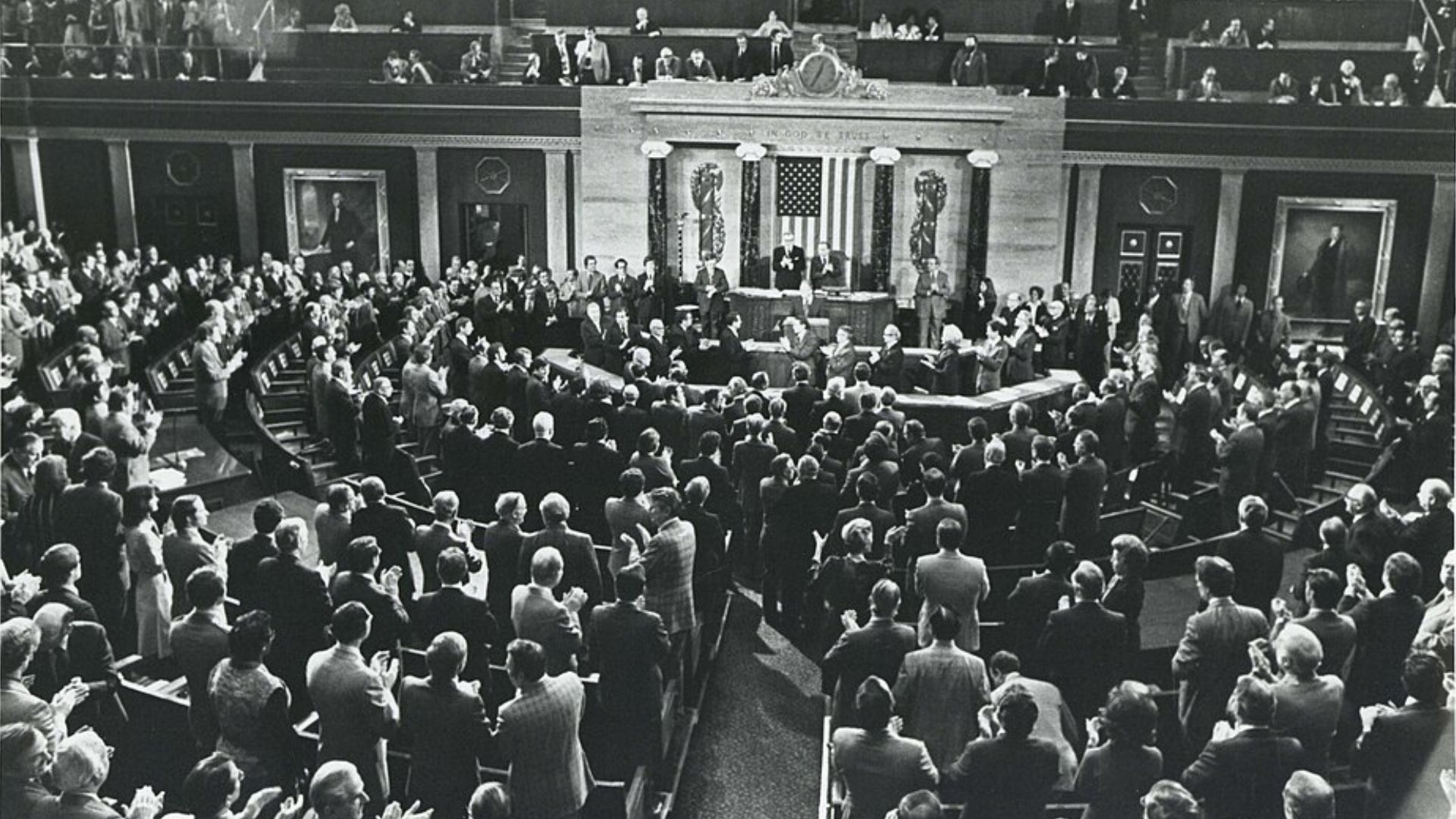
One of the strengths of the American political system is precisely this emphasis on electoral accountability. While, the United States possesses significant constitutional weaknesses, including the concentration of executive power in the presidency and the distortions produced by the first-past-the-post electoral system. Yet one of its greatest institutional strengths is that elected officials are continually required to answer to the public.
Members of the House of Representatives serve two-year terms, Senators serve six-year terms, and the President serves a four-year term. Congressional elections are staggered so that national elections take place every two years. During presidential election years, voters elect the President alongside members of Congress. Two years later, during the midterm elections, voters once again return to the polls to elect members of Congress, providing an opportunity to assess the performance of the incumbent administration before the next presidential election.
These midterm elections often serve as a national referendum on the governing party. When voters become dissatisfied with a President’s performance, they frequently express that dissatisfaction by reducing the governing party’s representation in Congress. Such losses can significantly constrain a President’s legislative agenda, forcing greater compromise, increasing oversight, and strengthening the opposition’s ability to scrutinise executive action. In effect, the American system ensures that national political leaders are subjected to meaningful electoral accountability every two years rather than only once every presidential term.
This principle extends beyond the federal government. State governors, legislatures, mayors, county officials, school boards, and numerous other elected offices all operate on overlapping electoral cycles. Consequently, political parties are under almost constant electoral scrutiny somewhere within the country. Decisions taken by national leaders frequently influence state and local elections, just as local political developments can shape national politics. The result is a political system in which public officials rarely have the luxury of governing for long periods without facing the judgement of voters.
This illustrates an important principle of democratic governance. Effective electoral systems are designed to create incentives for good performance. Elections function as periodic performance reviews, allowing citizens to evaluate whether those entrusted with public office have fulfilled their responsibilities. No one would seriously argue that regular performance evaluations prevent long-term planning in any other profession. Businesses routinely assess employees and executives through quarterly reports, annual reviews, and performance targets, not because they oppose long-term strategy, but because accountability improves execution. Long-term planning and regular evaluation are complementary rather than contradictory.
Politics is no different. Human beings respond to incentives, and governments are no exception. If an elected official knew that their position was guaranteed for ten or fifteen years regardless of their performance, what incentive would they have to remain responsive to the concerns of ordinary citizens throughout that period? Without regular opportunities for voters to reward success or punish failure, political leaders inevitably become less accountable to the public and more insulated from the consequences of poor governance.
The argument that governments perform better simply by removing electoral pressure therefore misunderstands both human nature and institutional design. It assumes that public officials will consistently act in the public interest despite facing fewer incentives to do so. Yet in virtually every other sphere of society we recognise the importance of oversight. Few people would willingly entrust the management of their business to someone and then refuse to review their performance for an entire decade. Likewise, shareholders regularly evaluate corporate leadership, and boards of directors continually monitor executive performance. The principle is straightforward: accountability strengthens institutions because it encourages competence, responsiveness, and responsible stewardship.
In many African countries, executive presidents are too often viewed not as temporary custodians of public office but as indispensable national figures whose authority should not be questioned. Admiration for individual leaders can gradually evolve into a belief that criticism weakens the nation or that constitutional constraints merely obstruct progress. In doing so, political leaders begin to resemble monarchs or saviours rather than elected representatives accountable to the people.
This is fundamentally at odds with democratic government. Public officials are servants of the public, not the other way around. Their legitimacy rests upon the continued consent of the governed, and when citizens conclude that they are no longer the best individuals to hold office, democratic institutions should allow that transition to occur peacefully.
Most importantly, we must distinguish between the continuity of governments and the continuity of states. Long-term development does not require long-term rulers. Roads, ports, railways, irrigation systems, power stations, universities, and national development strategies should endure across successive administrations. In reality, the greatest civilisations in history had not been built by single individuals but through the cumulative efforts of generations of leaders, officials, engineers, scholars, and citizens, each contributing to projects that outlived them. The objective of democratic governance should therefore be to build institutions capable of preserving long-term national development while ensuring that no individual remains indispensable to it.