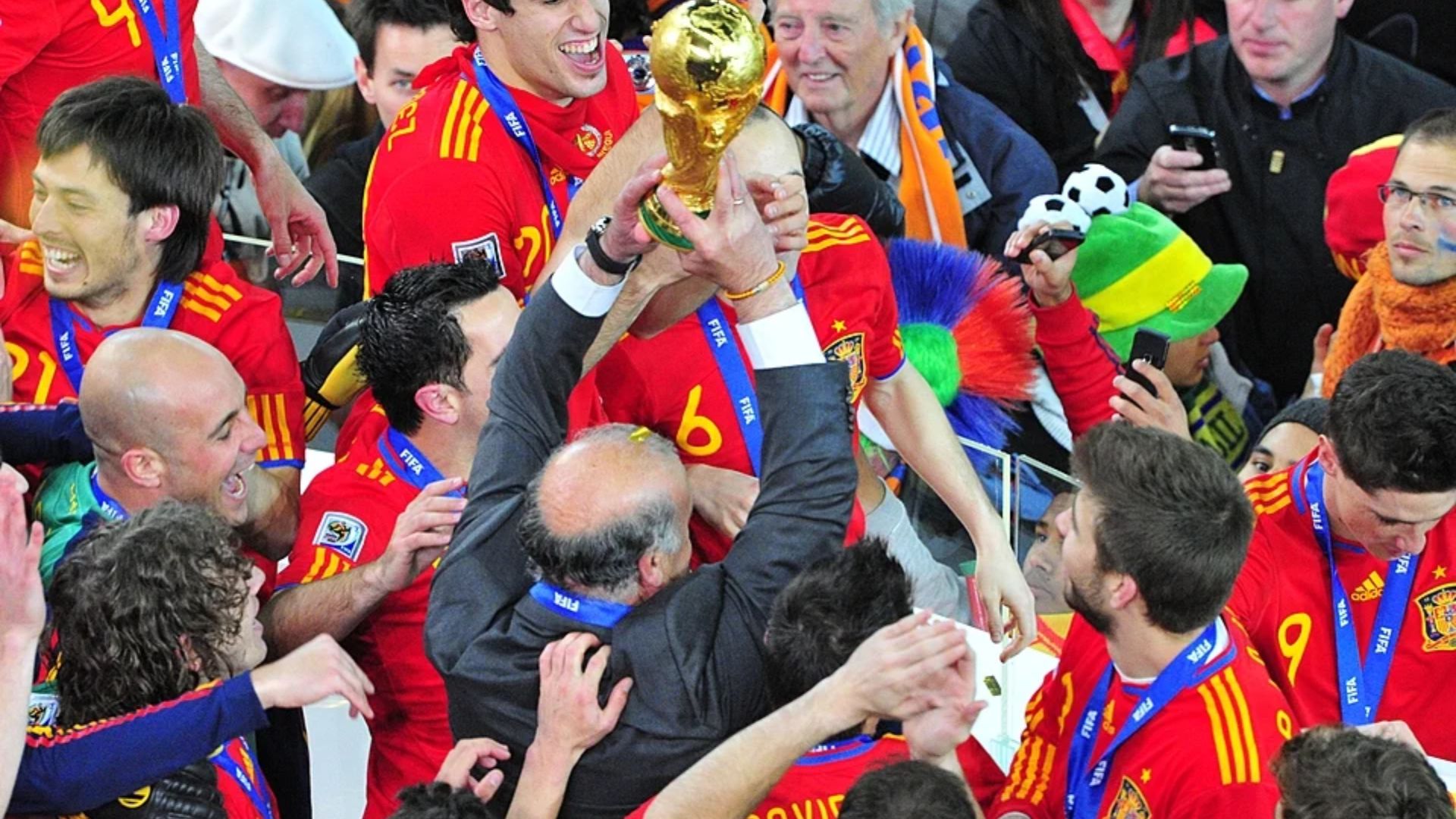
The FIFA World Cup is officially underway. Yesterday’s opening match saw co-hosts Mexico defeat South Africa 2–0. For many football fans, the fixture carried a sense of nostalgia. It was a repeat of the opening match of the 2010 World Cup in South Africa, the first time an African nation hosted football’s biggest tournament.
Some of my fondest childhood memories are tied to that tournament. Living in Botswana at the time, the 2010 World Cup felt like a moment of excitement, possibility, and celebration. For a few weeks, it seemed as though the entire world was watching the same thing, talking about the same stories, and sharing in the same emotions.
Even today, the World Cup still has that unique ability to take me back to that time. It take me back to a time when concerns about the economy, politics, careers, and relationships were not yet at the forefront of the mind. Events such as the World Cup and the Olympics have a remarkable ability to slow things down and bring people together. They allow us to watch the greatest athletes of their generation perform on the biggest stage and, for a moment, imagine ourselves in their shoes. They also give host nations an opportunity to showcase their culture, hospitality, and identity to a global audience.
In recent years, however, the World Cup has increasingly been accompanied by political controversy. Russia’s hosting in 2018, Qatar’s in 2022, and now the United States’ role as host in 2026 have all generated debates about politics, governance, human rights, and international relations. These concerns are legitimate and deserve scrutiny. Major sporting events do not exist in a vacuum, and neither do the countries that host them.
Yet history has shown that once the tournament begins, it is often the football itself that captures the world’s attention. The drama, skill, heartbreak, and triumph on the pitch tend to become the dominant story. While issues such as corruption, conflict, and human rights remain important, acknowledging those realities does not mean people must deny themselves the enjoyment of the tournament.
There is also a tendency today to view every event through an exclusively political lens. Politics undoubtedly matters, but not every moment of life must be reduced to political activism. It is not incumbent upon every individual to be engaged in every cause at every moment, nor should people be made to feel guilty for finding joy in a sporting spectacle. This is especially true in the case of organisations such as FIFA, over which ordinary football fans have virtually no influence.
The same principle applies in many countries where corruption, poor governance, or authoritarian tendencies exist. Citizens often have limited power to change these realities overnight. That does not mean they are forbidden from taking pride in their communities, celebrating their culture, or enjoying moments of collective happiness.
Advocating for change and holding institutions accountable is important. But those responsibilities do not have to consume every aspect of life. Fans can criticise FIFA, question host governments, and still enjoy the World Cup. These positions are not mutually exclusive.
As for me, I am looking forward to spending the next few weeks enjoying the matches unfold for those unforgettable moments that remind us why the World Cup remains one of the most beloved sporting events on the planet.
Across the continent
- Abiy Ahmed’s Prosperity Party is expected to be the winner of Ethiopia’s 2026 in a general election which excluded certain regions from the vote due to security concerns. Complete results are still yet be announced over a week since the voting took place.
- Hundreds of kidnapping victims in Nigeria’s Borno state have reportedly been freed by the Nigerian military. The victims had been kidnapped by Boko Haram earlier this.
- The United States Centres for Disease Control and Prevention (CDC) has warned that the current Ebola outbreak in Central Africa could grow to more than 20,000 cases.
- A Somali referee, Omar Artan, has been excluded from participating in the FIFA World Cup after being barred from entering the United States by US Customs and Border Protection.
Recommended Reads
Sports And Politics: A Match Made in Hell – on politics in sports