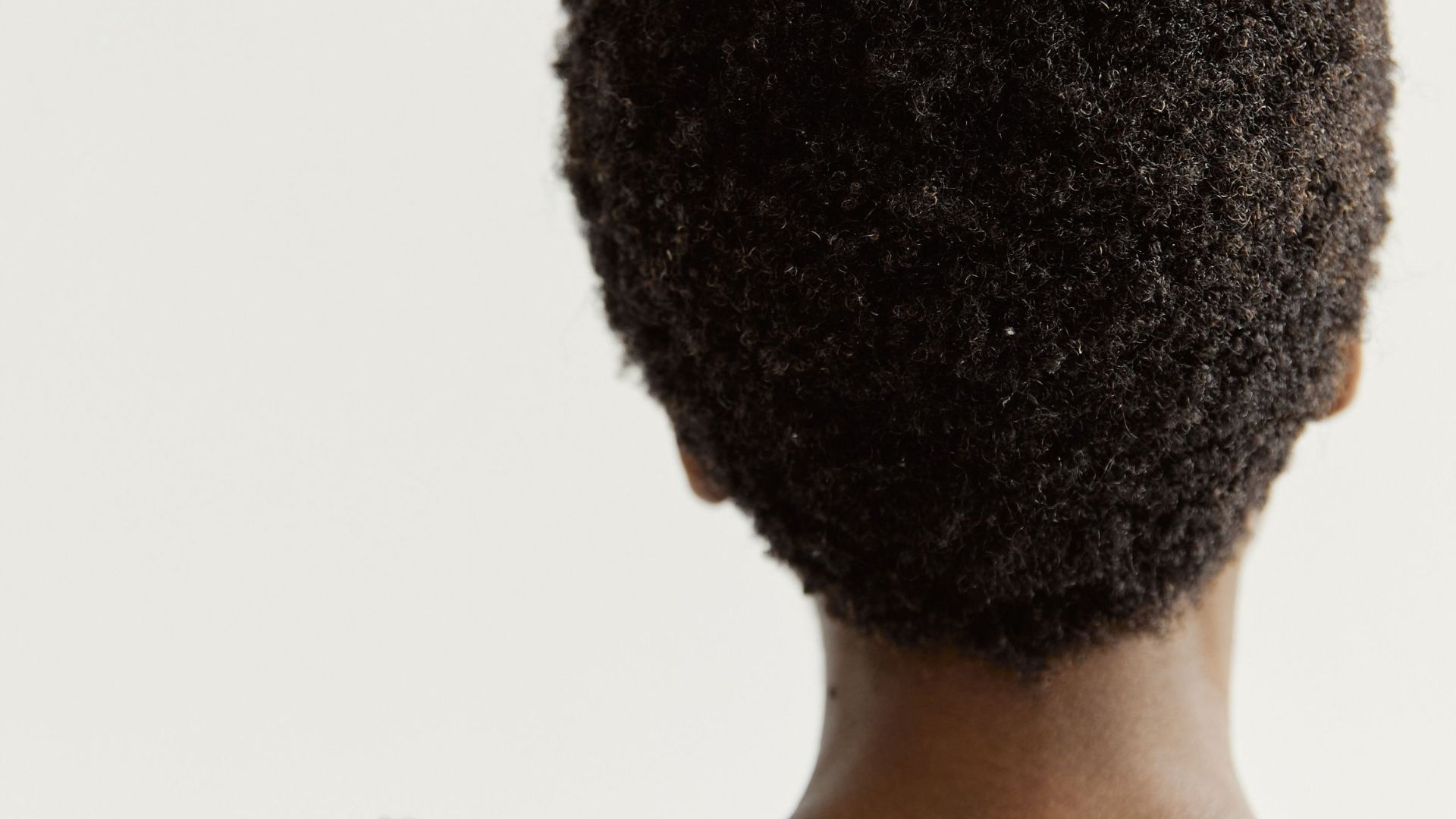
Throughout most of my life, I have tended to keep my hair relatively long, and I have always particularly enjoyed wearing it in an Afro. Yet because of this, I have consistently encountered pushback from people who describe my hair as “untidy”, “unkempt” or otherwise inappropriate. It is an attitude I have always taken issue with, and one that has become even more apparent to me since moving to Nigeria.
When I lived in Southern Africa, the stigma certainly existed. However, in my view, the history of racial apartheid in Namibia and South Africa also produced a strong backlash against the racist and colonial ideas that had historically associated Blackness, including Black hair, with inferiority. There is a particular sensitivity in Southern Africa towards the legacy of racial discrimination, and many Southern Africans have embraced natural Black hair and proudly wear it in its many forms.
I therefore assumed that I might encounter less of this stigma in West Africa. After all, most West African countries achieved independence from colonial rule decades ago, and the region does not have the same history of large-scale European settler populations that shaped countries such as South Africa, Namibia and Zimbabwe.
Yet after moving to Nigeria as an adult, I have been struck by how strong the stigma surrounding natural Black hair can be. Walking through the streets, while I have received plenty of compliments on my hair, whether I am wearing cornrows or an Afro; I have also received scowls and unsolicited comments from people telling me that I should cut it. What I find particularly interesting is that, from my own observations, Nigerian women sometimes appear to be among the strongest enforcers of these expectations, both towards men and towards other women.
Of course, this is not to suggest that Nigerian women are uniquely responsible for the problem. These attitudes are deeply embedded in society and can be reinforced by both men and women. But it is worth asking why natural Black hair continues to provoke such strong reactions in the first place. What would cause such large segments of society to view the hair that naturally grows on their head as a bad thing?
The idea that Afro-textured hair is inherently “messy” or “unprofessional” did not emerge in a vacuum. It has roots in centuries of racial hierarchy and colonialism, during which European features were often presented as the standard of beauty and respectability. During the era of the transatlantic slave trade and European colonial expansion, Africans and Europeans were frequently contrasted in explicitly racialised terms. Black physical characteristics, including tightly curled hair, were described using derogatory language, while straight, long and smooth hair was associated with European beauty and civilisation.
Over time, this contributed to a hierarchy in which proximity to European features could be associated with social status and beauty. Hair became one of the many physical characteristics through which racial and social hierarchies were communicated. And although colonial rule across Africa has ended this did not automatically erase these ideas.
One of the most troubling manifestations can still be seen in schools across Africa, where strict grooming regulations disproportionately target natural hair. It is shocking that in many African schools, both boys and girls are still often required to cut or shave their hair in order to attend school. Where students or their parents cannot or will not comply, they can face disciplinary action or even exclusion from school.
There is something deeply troubling about a society telling a child that the natural hair that grows from their head is incompatible with education. Imagine telling a young girl that she cannot enter her classroom unless she removes the hair that naturally grows from her scalp. What exactly are we teaching her about herself?
An Afro can be neat. Cornrows can be neat. Locs can be neat. None of these hairstyles determine a person’s intelligence, character, discipline or ability to succeed. Black people should not have to make themselves look less Black in order to be considered respectable. Natural Black hair is not a problem that needs to be fixed. It is simply hair. And there is nothing wrong with it.