Country to Watch: Senegal
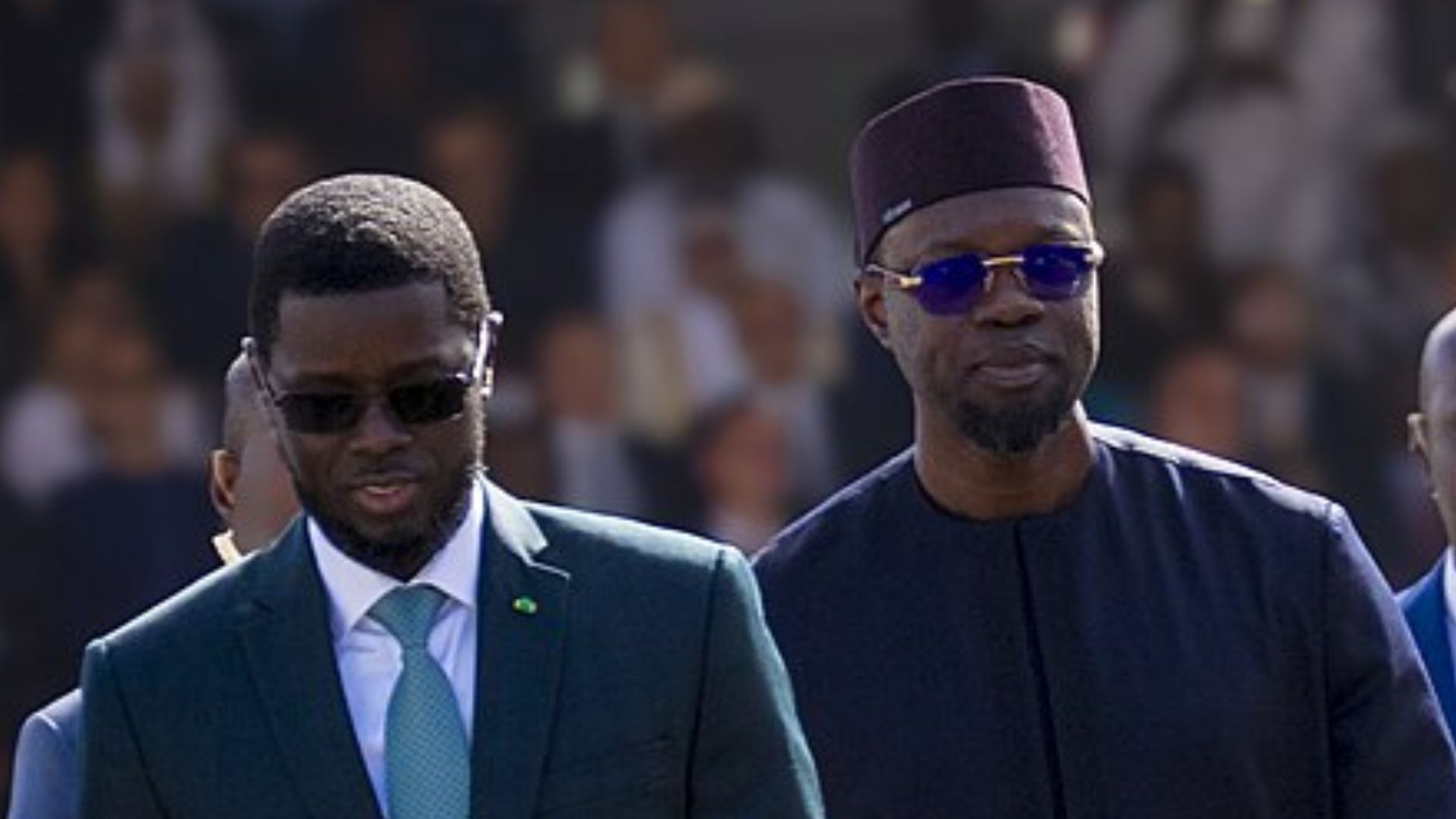
Senegal has, over the past few weeks, been gripped by major political drama involving former Prime Minister Ousmane Sonko and President Bassirou Diomaye Faye, threatening to fracture the political alliance that brought both men to power.
Background
Questions had existed from the outset about whether Ousmane Sonko would truly be willing to serve in a subordinate role under his longtime protégé, Bassirou Diomaye Faye. Since founding the PASTEF party in January 2014, Sonko had remained the movement’s undisputed leader and dominant political figure.
Under Sonko’s leadership, PASTEF quickly grew into one of Senegal’s most influential opposition forces. Sonko himself served as a member of the Senegalese National Assembly from 2017 to 2022 and emerged as a leading opposition figure during the 2019 presidential election, where he finished third.
Sonko was once again expected to lead PASTEF into the 2024 presidential elections. However, events took a dramatic turn on 28 July 2023 when he was arrested and accused of “disturbing public order.” Days later, on 31 July 2023, the administration of President Macky Sall formally dissolved the PASTEF party amid growing fears that Sall was attempting to maintain his grip on power by pursuing a controversial third term despite widespread constitutional objections.
The Protégé Becomes the Master
Following Sonko’s arrest and the banning of PASTEF, longtime ally Bassirou Diomaye Faye emerged as the face of the political movement. Faye had risen rapidly through the ranks of the party after its founding and had become one of the principal architects of Sonko’s 2019 presidential campaign.
Like Sonko, Faye was also arrested and imprisoned by Senegalese authorities ahead of the 2024 election. However, after Senegal’s Constitutional Court rejected efforts to postpone the election, the administration of Macky Sall reversed course. In an apparent bid to calm tensions, political prisoners were released and elections were held as scheduled, with Sall ultimately agreeing to step down in accordance with constitutional term limits.
With Sonko barred from contesting and PASTEF officially dissolved, Bassirou Diomaye Faye entered the race as an independent candidate backed by Sonko as well as former President Abdoulaye Wade and his Senegalese Democratic Party (PDS).
Faye would go on to secure a historic victory, winning over 54 percent of the vote and becoming the first opposition candidate since Senegal’s independence in 1960 to win a presidential election outright in the first round. Following his inauguration, Faye appointed Ousmane Sonko as Prime Minister.
The Split
Rumours of tensions between President Diomaye Faye and Ousmane Sonko had circulated for months, though both men repeatedly sought to dismiss speculation of a rift. Over the past week, however, the growing divide appears to have erupted into open conflict.
President Diomaye Faye dismissed Ousmane Sonko as Prime Minister alongside the rest of his cabinet before appointing a new prime minister to lead the government.
Sonko, however, remains far from politically weakened. Following his dismissal, he leveraged PASTEF’s parliamentary majority to secure election as Speaker of the National Assembly, setting the stage for what could become months, or even years, of institutional confrontation between the two former allies.
Sonko has already warned that he would be prepared to pull PASTEF out of the governing coalition and return the party to opposition should President Faye abandon the movement’s agenda.
Fragile Democratic Institutions
For decades, Senegal has enjoyed a reputation as one of West Africa’s most stable democracies in a region frequently marked by coups, insurgencies, and authoritarian rule. Yet the final years of Macky Sall’s administration demonstrated just how fragile democratic institutions can become even in relatively stable political systems.
Sall’s controversial attempt to pursue a third term, the imprisonment of opposition figures, and the dissolution of PASTEF raised serious concerns about democratic backsliding. Had Senegal’s Constitutional Court not firmly resisted attempts to delay the election process, the country’s political trajectory could look very different today.
That is precisely why the growing feud between President Diomaye Faye and Ousmane Sonko deserves close attention. Questions are already being raised over whether proper constitutional and parliamentary procedures were followed during the cabinet reshuffle and Sonko’s appointment as Speaker of the National Assembly.
What began as one of Africa’s most celebrated opposition movements now risks descending into an internal power struggle that could test the resilience of Senegal’s democratic institutions once again.
Across the Continent
- Ousmane Sonko has been sacked as Senegal’s prime minister after breaking with his fromer ally President Bassirou Diomaye Faye.
- Ethiopia will hold general elections on June 1st, with prime minister Abiy Ahmed expected to maintain his grip on power.
- More than 1.5 million Muslim pilgrims from around the world have have gathered in Saudi Arabia for the Hajj pilgrimaje
- South Africa’s parliament has set a date for the first meeting of a special impeachment committee against President Cyrill Ramaphos over the “farmgate” scandal
- At least 16 schoolgirls have been killed and 79 hospitalised in a fire at a girld boarding school in Kenya.
Recommended Reads
Africa’s Younger Generations Must Be Better – On new generation of African leadership
African Countries Need to Abandon the Presidential System – On the centralised and hyperpresidential political systems adopted across Africa
The Exit of the French Military From West Africa Should be Met With Caution – On the exit of the French military from West Africa